Advertisers used targeting controls to say two different things, where their business cannot deliver and what is worth more to them. Value Expression gave the second one its own control.
Role
Senior Product Designer to Staff Product DesignerDesign lead, Value Expression · set the direction, coached the designer who shipped it
Company
PinterestMonetization Org
Timeline
Q4 2022 to Q2 2025Active development Q3 2024 to Q2 2025
Impact
$104M Q4 2024Combined with Bid Multiplier
01The stakes
Q4 2022
Performance+ was live and beating targets when the requests started.
Hard constraints fragment the automation's ability to optimize. Every audience excluded shrinks the pool it can target, and every spending cap limits its runway.
Performance+ was working. Then advertisers started asking for things that would break it.
Cap retargeting spend at 30%. Exclude California. Limit delivery to five audience segments. Each one had a real business behind it. Margins differ by customer type, inventory is finite, some regions carry more weight than others. Some of those were true limits. Others were preferences written as limits, and those would have made the advertiser’s own campaigns perform worse.
Some inputs were limits on the business. Others said what mattered more. We needed a way to capture both and keep their effects distinct.
Where all three products came from
02The strategy
2023 to 2024
The “signals, not constraints” language became how PM, Eng, and PMM talked about the product.
Advertiser control versus automation performance was a standing argument. Value Expression is an implementation of the Optimal Setup Framework I wrote, the same framework Performance+ was built on. The framing settled it, and a mid-level designer took the work from there.
Framing
Established the framing the org adopted. It settled the standing tension between advertiser control and automation performance.
Coaching
Ran design reviews as a mid-level designer moved to owning the work. That designer shipped Bid Multiplier, then took on Audience Weight and Spend Preference independently.
Principles
Lean into value. Express importance in relative terms, not absolute budget figures. Simplicity over precision. Set expectations. A signal weights delivery, and the system still decides where the money lands. Reporting looks backward at what happened.
Prioritization
Studied how Meta handles Advantage+ audience definition and budget allocation, then led prioritization with PM. Bid Multiplier was sequenced first, with Audience Weight and Spend Preference mapped as follow-on releases.
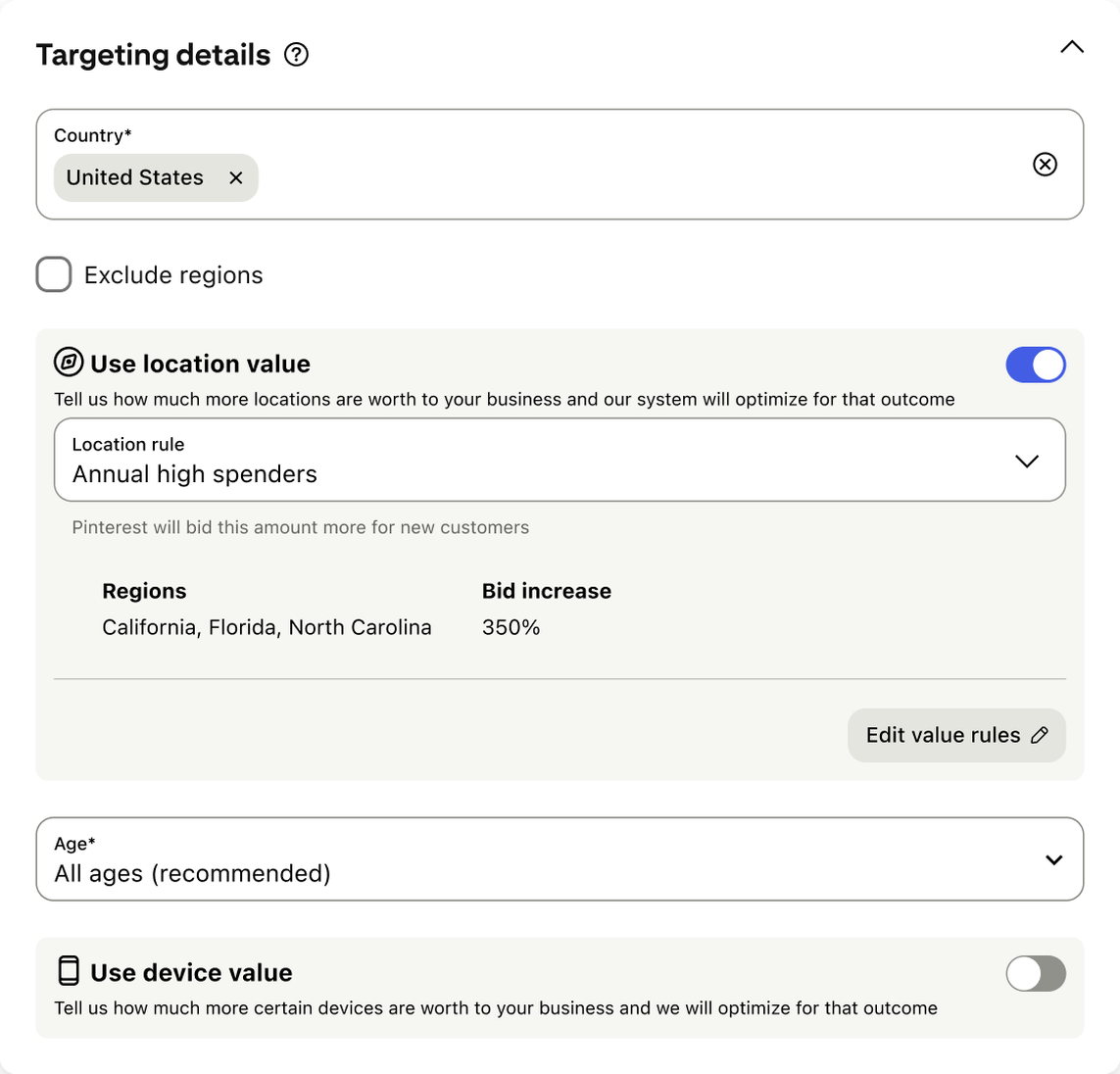
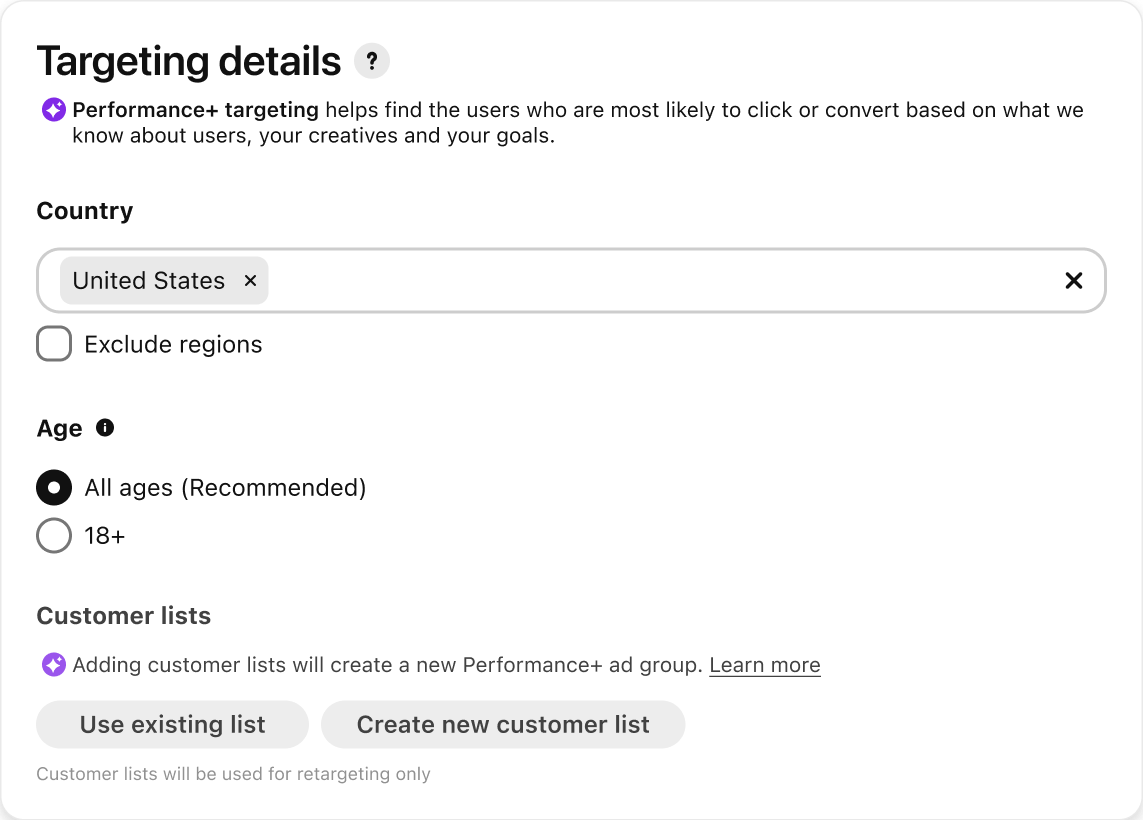
Fig. 01 · Exclusion, then signal. Drag to wipe. On the left, geo limitations. Intent can only be expressed as a hard rule, so wanting more of California means forbidding everywhere else. On the right, the same module with a geo value rule. The same intent becomes a weight the system bids against. The right card is taller because the feature added a block, not because it was scaled.
BeforeAfter
Fig. 02 · The reframe. Constraints become signals, the foundation for Bid Multiplier, Audience Weight, and Spend Preference.
Traditional model
Constraints
דOnly target California”
דCap retargeting at 30%”
דExclude these audiences”
Fragments delivery
Shrinks what the model can learn from
→
Value expression model
Signals
✓“Prioritize California”
✓“Weight prospecting higher”
✓“These audiences matter more”
Guides delivery
Gives the model more to learn from
03Shipped
Q3 2024 to Q2 2025
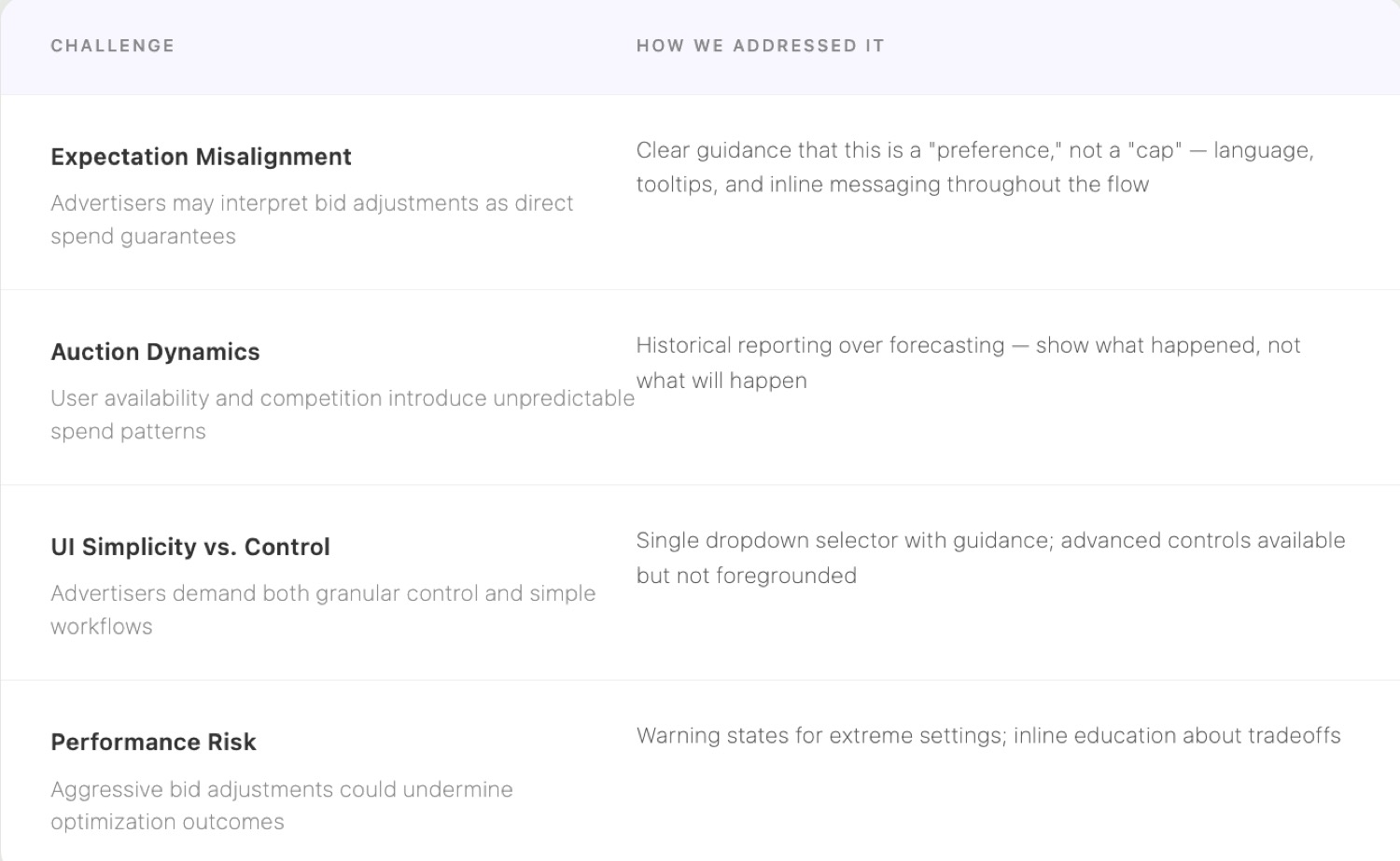
Advertisers read bid adjustments as spend guarantees, but auction dynamics make spend unpredictable.
Advanced controls stay available but not foregrounded.
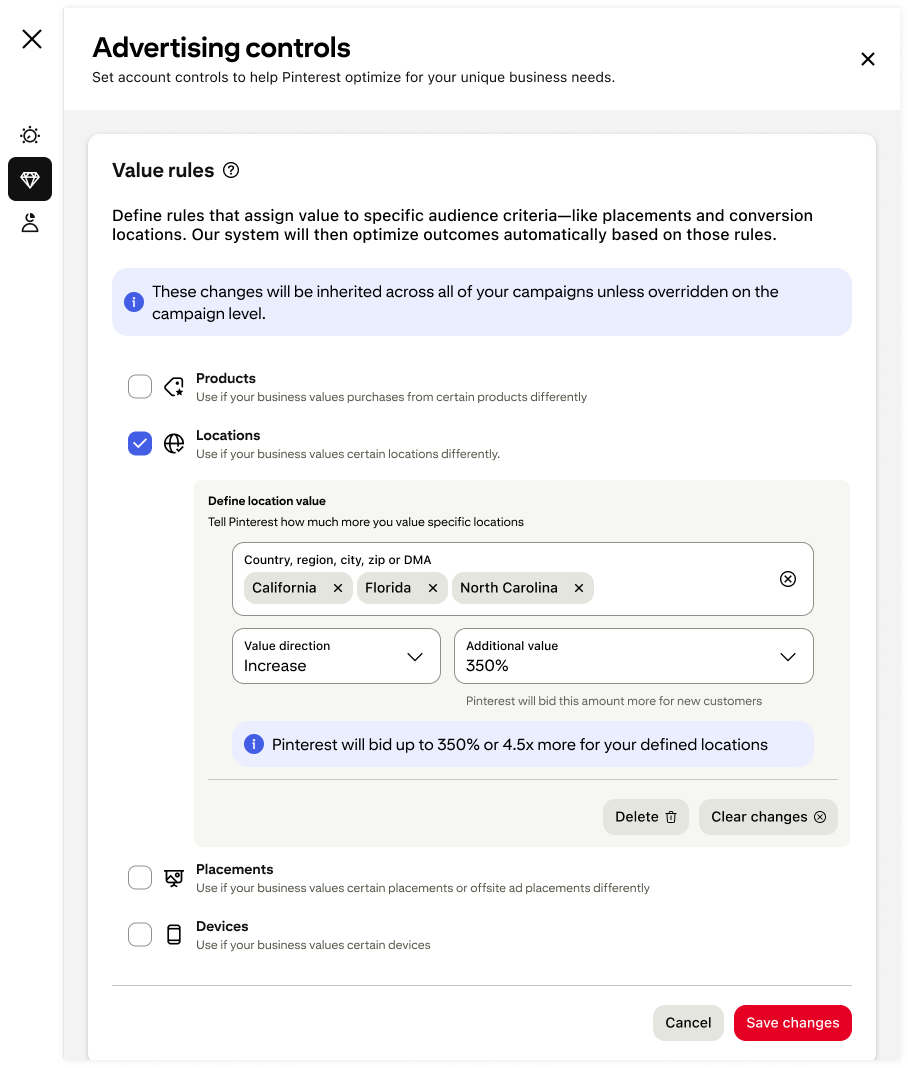
What an advertiser cares about stays the same from campaign to campaign. So the account holds the value rules, and campaigns inherit them without anybody restating anything.
The hard part came after. The backend could adjust bids to influence delivery. It could not guarantee a separate budget for each ad group. A percentage felt familiar, but it could read as a promise about spend that the auction cannot keep, so the label, the guidance and the reporting all had to make that limit clear. Warning states catch the extreme settings. Reporting shows what the preference actually did, next to live campaign performance, broken down by the distinctions the advertiser gave us, such as valued regions and new versus existing customers.
The alpha shipped with blank percentage fields, and advertisers guessed at what to type. A later brief described it as “button of hope” guessing. Advertisers wanted presets and clearer guidance. The Audience Weight brief had already named the risk, high potential for confusion and no benchmark for how much deviation advertisers would tolerate. I wrote that down and shipped anyway.
Fig. 03 · Settings level. Account-level value rules for locations, products, ad placements, and devices. They define an advertiser's way of doing business and inherit across campaigns.Fig. 04 · The preference, reflected back. Ads reporting with value rules applied. The campaign table carries the rule on each region, and the campaign slide-out re-weights the whole performance picture by it. Valued spend, ROAS, new customers, then region by region. Recorded from the shipped product.Account and campaign figures shown are demo data.
0:00
Fig. 05 · Expectation setting. The hard part, mapped. A signal reads as a preference, not a cap. Reporting shows what happened, not a forecast. Warning states catch extreme settings.
$104M
Q4 2024, with Bid Multiplier
3
Products from one framework
Org-wide
Framework adopted
0
ML optimization fragmented
04What it enabled
2025 → 2026
The same signal model kept extending, to audiences, product groups, budget allocation and reporting.
Audience Weight · the same signal model applied to customer lists and custom audiences.Shipped
Priority Products · product-group-level bid prioritization for margin, inventory, and seasonality.Backend alpha
Spend Preference · prospecting versus retargeting allocation as a signal rather than a hard budget split.2026 roadmap
Reporting clarity · a bid weight indicator shows how preferences translated to delivery outcomes.2026 roadmap
The part I'm proudest of is the handoff. A mid-level designer walked into a new product category with almost nothing settled in it, and needed direction to start. Bid Multiplier shipped with me in every design review. Audience Weight and Spend Preference, they took on without me.