Advertisers give Performance+ a goal, a budget and creative, and it sets up the rest of the campaign. I led its design and set the direction that connected creation, delivery and reporting.
Role
Senior Product Designer to Staff Product DesignerDesign lead, Ads Automation · across 5 designers, 2 researchers, 4 teams
Company
PinterestMonetization · Ads Platform
Timeline
Dec 2022 to Oct 2025Vision, 100% rollout (GA), roadmap
Impact
$600M+ annual run rate at GA57% over the $7M year-one target
The callWhat was on the table
Half-automation erodes trust faster than full commitment.
Engineering wanted
Incremental migration.
Sales wanted
Both flows.
The line held
A single-page flow for performance-matched objectives. Full control preserved for audience-based ones.
What it returned
Year one beat the $7M target by 57%. $600M+ annual run rate at general availability.
What it cost
The first simplification cut too far. Exclusions came back, then age gates for regulated categories, then reporting breakdowns. Every one of them was a real business need I’d argued was noise.
01Starting from the advertiser’s goal
Dec 2022
Advantage+ and Performance Max, rival automation tools, had a multi-year head start.
Year one beat the $7M bar by 57%. $600M+ is the run rate at full availability.
Advertisers were already moving billions into automated campaigns on other platforms. Pinterest had nothing to sell them.
Setting up one campaign still took 30+ manual decisions. I had already written the framework for what good automation should look like, starting from what an advertiser was trying to do. Nothing had been built on it yet. The first-year revenue target was $7M.
The automation piece isn't about doing the work for the human. It's about making the work less taxing on the human.
Standard setup · 30+ decisions
Choose targeting criteria
Set bid strategy manually
Configure demographics
Select interest categories
Define where ads appear
Manage creative rotation
Set frequency caps
+ 23 more…
Performance+ · 3 inputs
01What's your goal?
02What's your budget?
03Upload your creative.
The system handles the rest.
Leadership wanted “simple.” Simplicity is a byproduct of removing what doesn't yield value, not a goal in itself.
The reframe that set the design agenda
02Setting one standard for four teams
Aug 2023 onward
Vision work began August 2023, before the P+ mandate existed. When the org committed, it became the foundation.
Four teams had been working separately. A weekly review across all four became the thing everyone planned around.
Eng wanted incremental migration, and Sales wanted both flows. The line held. Half-automation erodes trust faster than full commitment.
If we knew the advertiser’s goal, budget and creative, we could give them the controls that campaign needed. I used that idea to define optimal setup. Choose useful defaults, keep the inputs that change the outcome, and keep the limits the business really has.
Frameworks
I wrote the Optimal Setup Framework before Performance+ had a mandate or a slot on a roadmap. It started from what an advertiser was trying to do and set every default downstream from there. Performance+ is one implementation of it. The automation product for smaller advertisers is another. PM, Eng, and PMM all worked off it.
Team
Led five designers and two researchers. Grew a junior into owning the core creation flow, and coached the designer who went on to lead the Value Expression line.
Research
Directed the studies behind the biggest bets. Does the number of conversions matter more, or their value? What are the tradeoffs between bid signals and constraints?
Adoption
Designed how advertisers found out it existed, through upsell modals, account banners and messaging keyed to how far along they were. Active automated campaigns grew 15× in three weeks.
“Optimal setup” first appears as a single paragraph in an August 2022 design brief on guidance, before Performance+ had a mandate.
Fig. 01 · One phrase, three documents. “Optimal setup” was later built out into a two-part framework. Two years later, the August 2024 concept for Performance+ 2.0 still named its targeting control after it.
Aug 2022Guidance Frameworks brief
WIP Design Brief: Guidance Frameworksp. 5
Optimal Setup, Objective Match + Tradeoff Framework
A framework that helps us be opinionated in workflows to drive the best outcomes for advertisers (e.g., optimal setup, etc) by leveraging what we know about advertisers and their stated goals.
TBD
CP example
Lower funnel ad group setup vs upper funnel setup
Setting up feeds and tags
The whole idea as first written. One bullet still reads TBD.
Built outOptimal Setup brief, parts 1 + 2
Intent capture
Optimal creation flow
That one bullet became worked examples, with intent captured once and every default set downstream of it.
Aug 2024Concept review
In the 2024 concept the control still reads “Optimal targeting setup is on.”
Before the framework, objective and budget sat at the campaign level and seven settings followed at the ad group level. No row carried a smart default.
Fig. 02 · Current state. Fig. 08 shows the flow once intent is captured first.Redrawn from the Optimal Setup design brief. Content is transcribed from the original diagram.
Campaign level
Objective
Campaign Budget
Ad group level
Geo-targeting
Demography (e.g. gender, age, placement, etc)
Interest/Keyword Targeting
Audience Lists
Optimizations
Bidding
Ad Creative
In the framework, intent is captured once at the top and every default below is set from it.
Fig. 03 · The framework applied. Two worked examples from the brief, set side by side. Read across a row. Where the upper funnel constrains, the lower funnel states intent, most often as a bid multiplier.Redrawn from the Optimal Setup design brief. Content is transcribed from the original diagrams.
IntentConstraint
Upper funnel example
Lower funnel example
Intent capture input
Inputs
Objective: Brand Awareness
Campaign Budget
Creative Type/Source: Video
Objective: Conversions
Campaign Budget
Creative Type/Source: Catalog
Optimization
Intent5s Video ViewIntentVideo Completion
IntentMax volume of conversionsIntentMax value of conversions
Optimal creation flow outputs a smart default per row, each with its fine-tuning
I defined which advertiser mindset or need belongs at each level of automation, and why. Pinterest’s external framing of Performance+ later adopted this structure, organizing the product family across bidding, creative, and targeting.
Fig. 04 · Range of Automation. Full auto, fine-tuned, recommendations, manual. Any segment can use any level.
The mindset or need at each level
Three nested frames. The SMB frame holds Full Automation. The Torso, Head + frame holds Full Automation and Fine-tuned. The All segmentations frame holds all four levels. Any segment can use any level.
SMB
Torso, Head +
All segmentations
Full Automation
“The machine does the work”
Shipped asPerformance+
Fine-tuned
“The machine works with defined constraints”
Shipped asValue Expression, Bid Multiplier
Recommendations
“The machine notifies when to optimize”
Shipped asLearning Phase, Mid‑flight Guidance
Manual Control
“Human makes all inputs themselves”
Shipped asStandard Create
Machine decides
Human decides
Machine decidesHuman decides
03Making every decision earn its keep
Oct 2024
From 30+ decisions to three inputs, with roughly 60% fewer clicks and less time to a live campaign.
Benchmarked with keystroke-level modeling against Pinterest's standard flow and competing automated products. Every decision point that survived had to earn its keep.
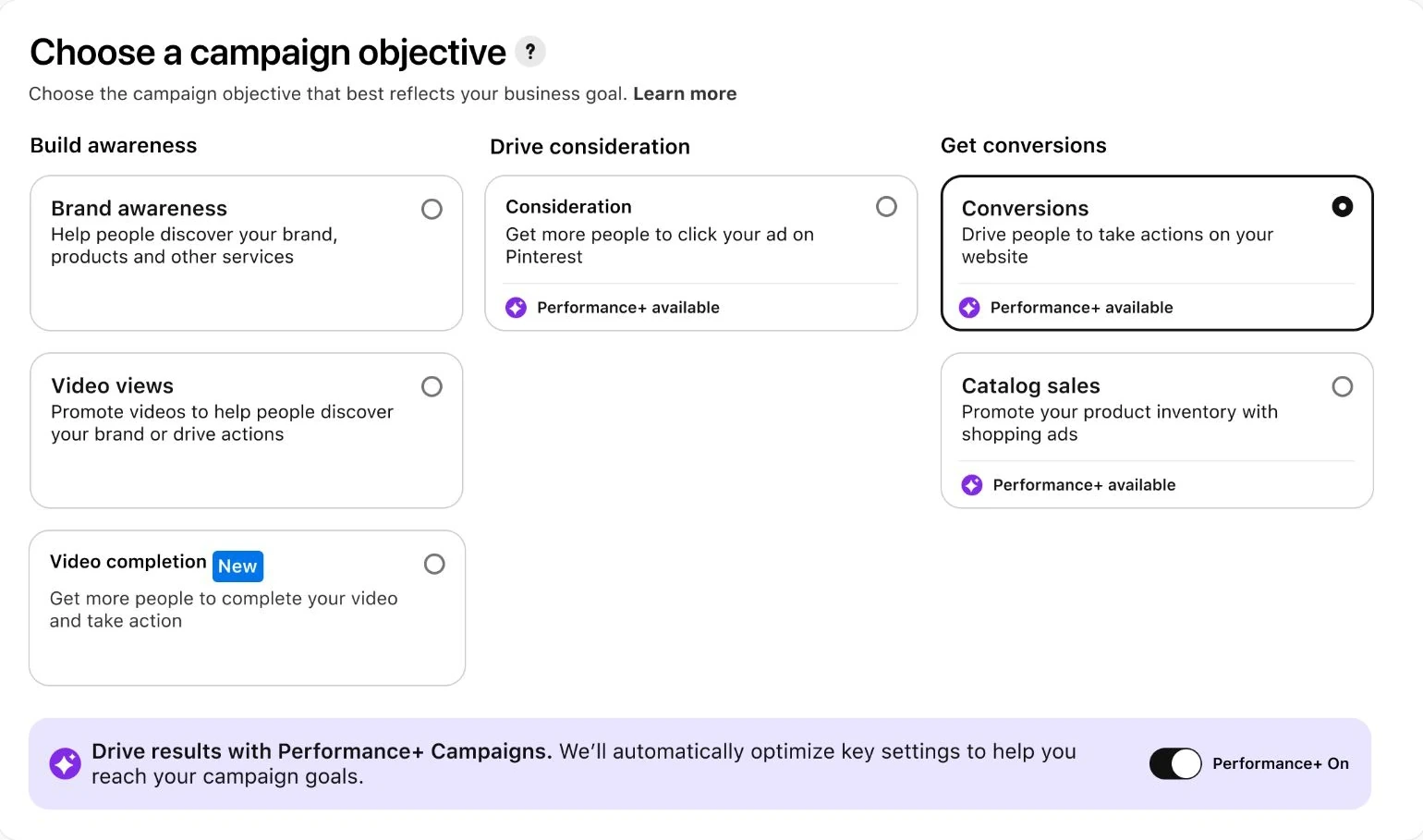
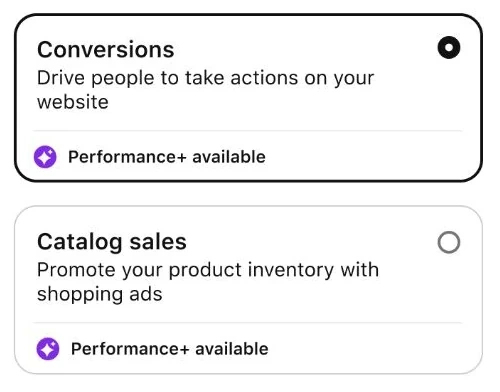
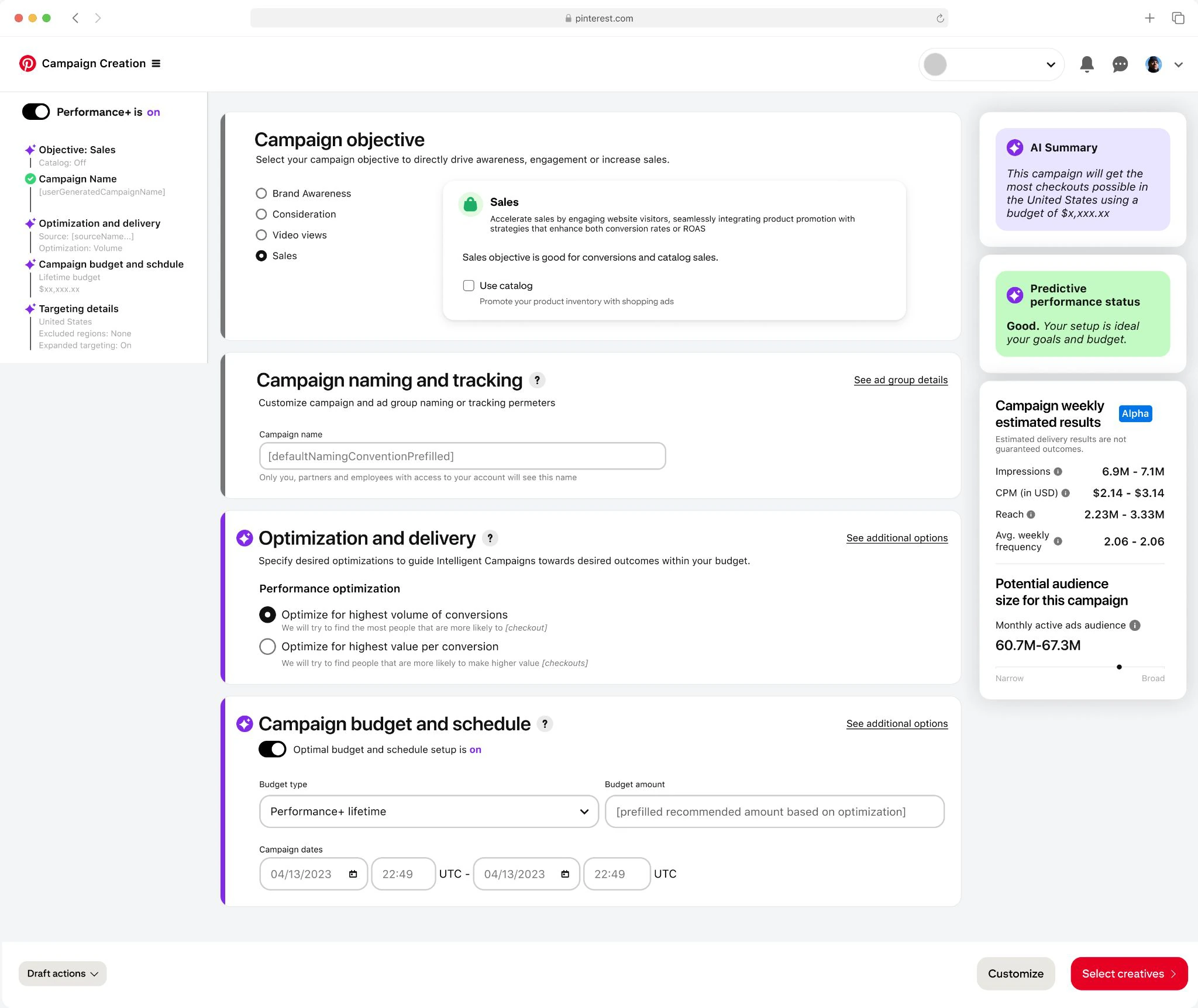
The flow starts from the objective, and Performance+ is one switch on that step.
Fig. 05 · Campaign creation. Where an objective supports it, the option says so on the card.Design frame from the August 2024 review of campaign creation.
Automation still had to respect what the business told it. A business that cannot deliver to Alaska needs an exclusion. An advertiser whose California customers are worth more needs a way to say so. One input limits where delivery can happen, and the other guides bidding. The setup had to keep that distinction as we introduced automation.
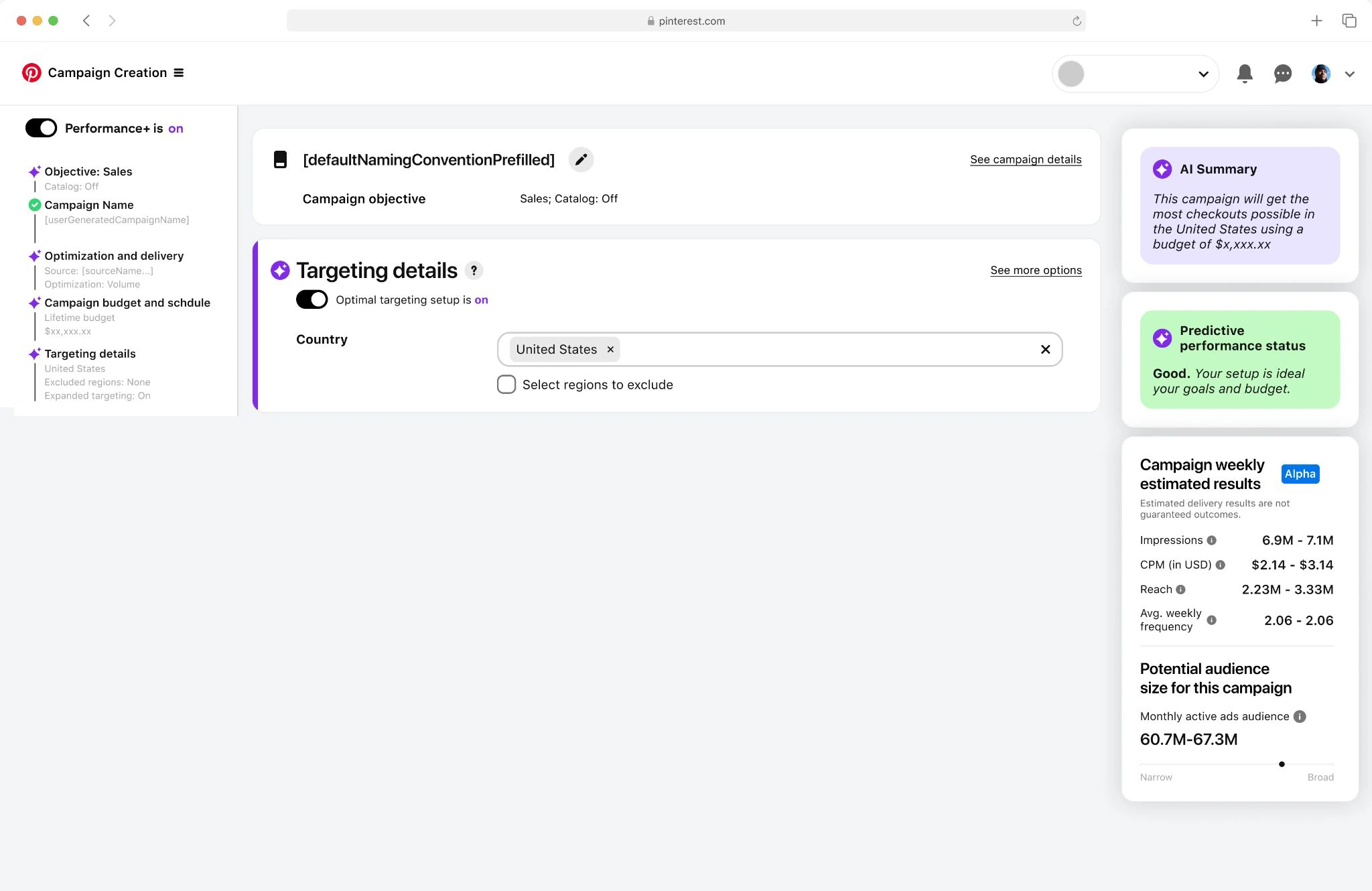
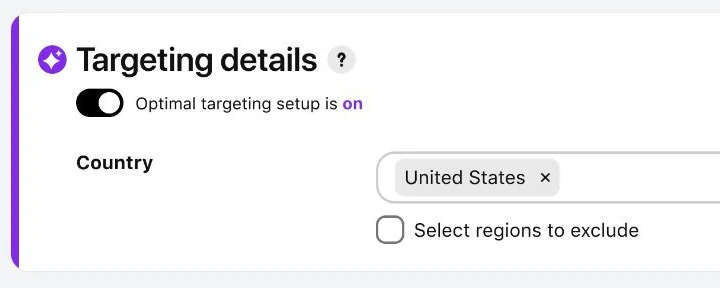
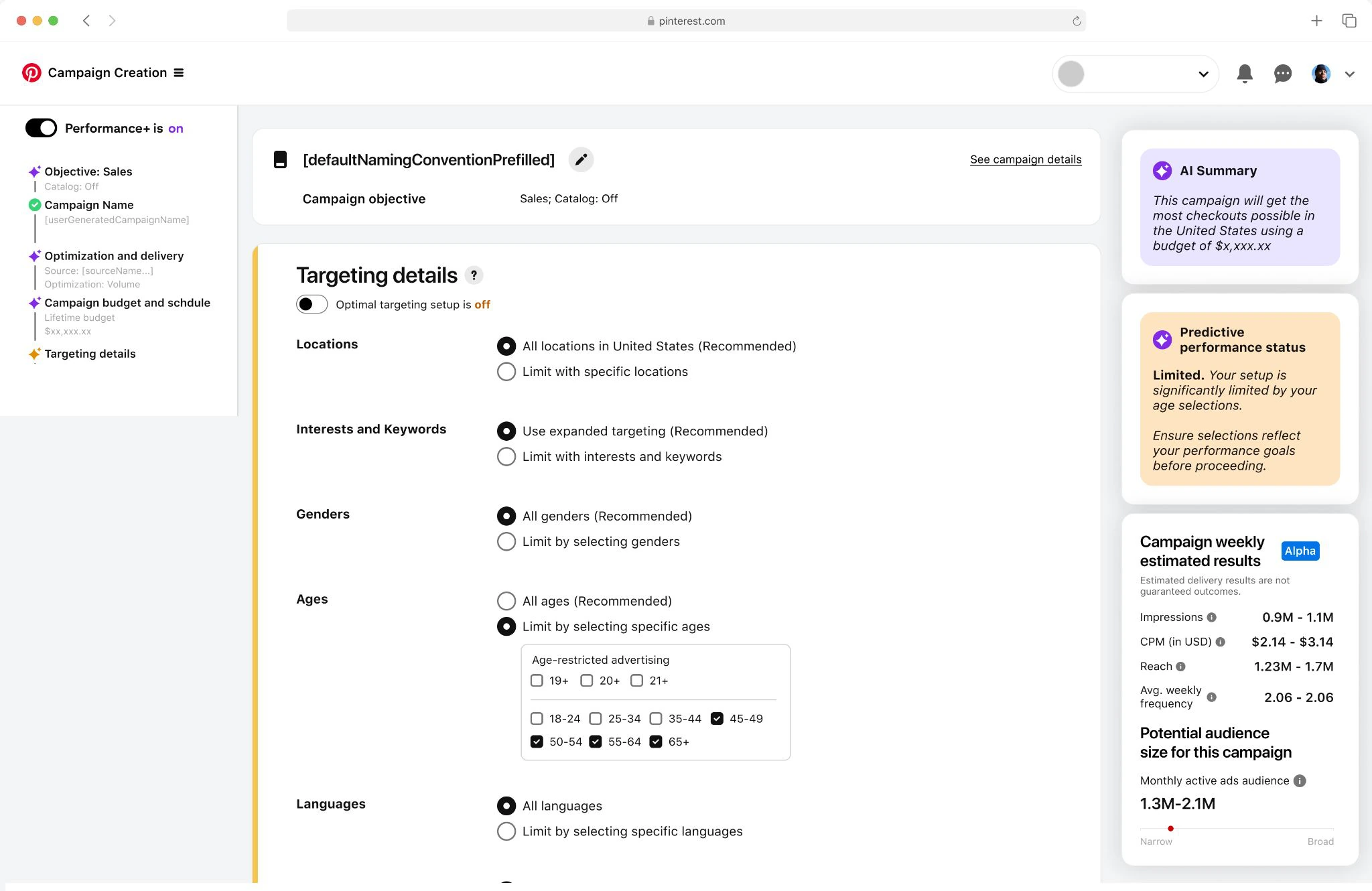
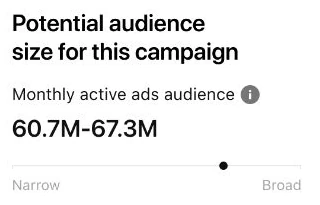
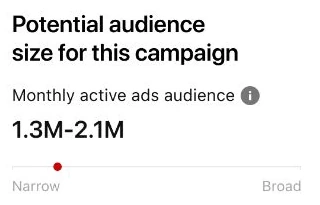
The rule was optimal by default, flexible when needed. In the August 2024 concept for Performance+ 2.0, optimal targeting keeps one country field and still offers “Select regions to exclude.” Turning it off is allowed, and the screen shows what it costs. Five fields unfold, the status turns amber, and the estimated audience drops from 60.7 million to 1.3 million.
Fig. 06 · Automation on, automation off. The Targeting details screen in both states, from the Performance+ 2.0 concept.Concept frames from the August 2024 design leadership review, not shipped product. Audience estimates are the concept’s example data.
Audience 60.7M–67.3M · setup is idealAudience 1.3M–2.1M · significantly limited
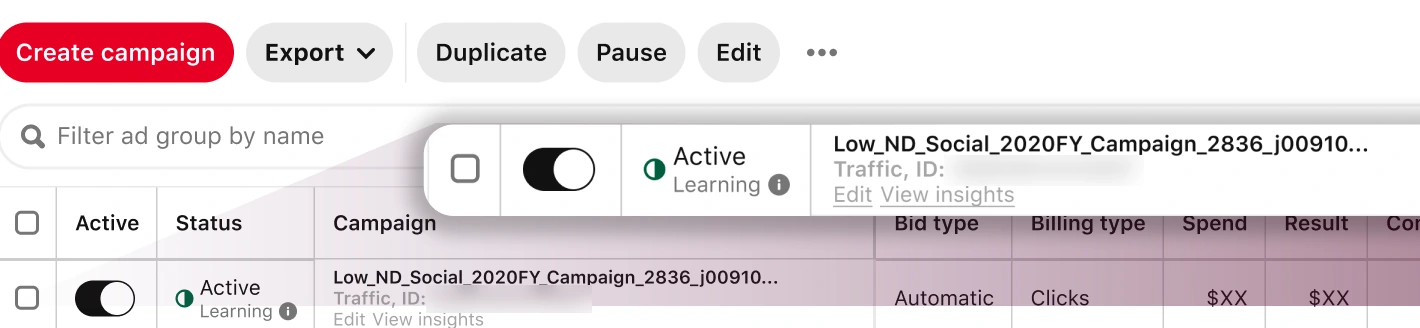
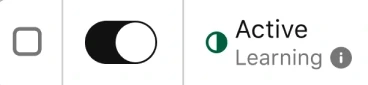
Trust took one more thing. The system had to say out loud when it was still learning.
Fig. 07 · Learning Phase in reporting. Trust is a reporting feature, and this is where it shipped.Campaign identifiers redacted.
$600M+
Annual run rate at GA
57%
Over the $7M year-one target
15×
Campaign growth, 3 wks
7
Features across 4 teams
“Our ad innovations, like Performance+, have a compounding effect over time… We've seen a 20% CPA improvement for advertisers using Performance+ for shopping campaigns.”
I explored using the advertiser’s intent to choose the setup. An outcome-focused objective would lead to one short flow with smart defaults. An audience-focused objective would keep more targeting options. The brief was marked work in progress, and how campaigns and ad groups would behave was still an open question.
Objective mismatch is the second half of the 2022 paragraph, and where Bid Multiplier came from.
Fig. 08 · Objective match. When the objective is outcome-focused, intent resolves to one optimal creation flow.Both figures are redrawn from the Optimal Setup Part 2 brief, a work in progress about future campaign creation. Content is transcribed from the originals.
Fig. 09 · Objective mismatch. When it is audience-focused, the flow splits into parallel ad groups and leans on auto-bidding and Bid Multiplier.Both figures are redrawn from the Optimal Setup Part 2 brief, a work in progress about future campaign creation. Content is transcribed from the originals.
Intent capture (Input)
Objective
Campaign Budget
Creative Type/Source
OptimizationAudience-focused (Objective mismatch)
Ad groups
Smart defaultGeo-targeting
Smart defaultDemography
Smart defaultInterest/Keyword Targeting
Audience Lists
Smart defaultAuto-bidding, Bid Multiplier
Smart defaultAd Creative
Smart defaultGeo-targeting
Smart defaultDemography
Smart defaultInterest/Keyword Targeting
Audience Lists
Smart defaultAuto-bidding, Bid Multiplier
Smart defaultAd Creative
Smart default
Not a smart default
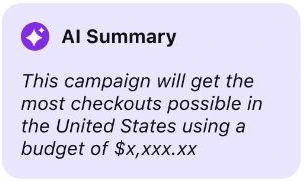
In the August 2024 concept, Performance+ stops being a mode and becomes the surface. Objective, delivery and budget sit in one flow, with the system summarizing the campaign back in plain language and scoring the setup before it runs.
Fig. 10 · Where creation goes next, August 2024. A frame from the design leadership review of the future of campaign creation.Concept work from the August 2024 review, not shipped product.
Four teams picked the frameworks up and kept building on them. New designers are still onboarded through the framework the work was built on. Bid Multiplier shipped. The CTV extension is still in progress.
The first simplification cut too far. I'd written the principle about capturing true constraints, the geographic ones and the regulatory ones, and then cut past it anyway. Exclusions came back, then age gates for regulated categories, then reporting breakdowns. Every one of them was a real business need I'd argued was noise.