Skip to the case

Presence · Human Commons · 2026 to now

A friends app you set up once, then put away.

Summary

Met, not watched. Presence tells one friend you’re close, only when and where you chose. I read the market, set the position, made the product calls, designed it and built it with AI agents.

  • ProblemEvery app in the category tries to make always-on watching feel friendly.
  • ApproachOne person sets rules on when they are fine with a friend knowing they are nearby. That friend decides if they want to engage, or be known to be nearby too.
  • ResultOpen beta on iPhone, general release early 2027.
Presence in build 27.Recorded in demo mode. The people are made up. In the third clip both friends have a rule for each other, so both are told.
01 · Write the rule
0:00
02 · It goes live
0:00
03 · A friend is near
0:00
2,590
App reviews read before I set the position
5 → 1
Screens to write a rule, April to now
1,387
Automated tests
2027
General release, early in the year
Role
FounderProduct, design and engineering · one person with AI agents
Studio
Human Commonsjoinpresence.app
Timeline
April 2026 to nowBuild 28 with testers, build 29 open
Status
Open beta on iPhoneGeneral release early 2027
The callWhat was on the table

Being told that a friend is near should cost that friend nothing.

How I built it first

When a rule fired, the friend got a notification and I got a card on Home that named them. Both of us knew.

The middle path

Tell me that one of my people was told, and leave out the name. I turned it down in October.

The line held

One person sets rules on when they are fine with a friend knowing they are nearby. That friend decides if they want to engage, or be known to be nearby too.

What it returned

Saying yes to a friend’s rule gives nothing away. It went live for nearby rules on October 12 and for places and cities on October 20. On October 30 I wrote the promise down in one paragraph and checked every screen against it.

What it cost

A quiet app and a broken app look the same. People couldn’t tell whether a rule was working, so build 27 added Check It’s Working and Send Me a Test. And the promise caught me. The yes screens for place and city rules still described the old way in builds 25 and 26.

01ProblemThe gapWho else is here?

Facebook closed its own version, Nearby Friends, in 2022 for low usage.

Every app in the category tries to make always-on watching feel friendly.

Find My and Life360 answer one question. Where is this person right now? Some of it comes with a timer, an hour or until the end of the day. Either way two jobs land on you. Someone can check on you, and you have to keep checking the app.

Before I set the position, I had AI agents read 2,590 recent App Store reviews of six apps in the category. A second pass checked what they found. The word track shows up in 70 of 500 Find My reviews and 58 of 500 Life360 reviews. One reviewer asked why an aunt is notified every time they go to a store.

Fig. 01 · What each app gives a friend, and what it leaves you doing.Drawn for this page from the October 14 review of the category. Time limits checked against each company’s own pages on November 12.
A friend gets
For how long
It leaves you
Find My
A live map of where you are
An hour, until the end of the day, or with no end
Picking a timer, and remembering who can still see you
Life360
A live family map, and alerts when you come and go
Always. A Bubble blurs it for up to six hours
Staying on the map
Snapchat and Instagram maps
Where you were when you last opened the app
Until you turn it off
Choosing an audience, or hiding
Presence
One line that says you’re close
Only while a rule you set is true. Then it rests for four hours
Nothing. Set it up once and put it away

Presence is for people who’d like to know when a dear friend is nearby, without the cost of surveillance in either direction.

Here’s what I mean. There’s a spot I go to a lot. It’s open all day, and some days I work from there. I don’t want my best friend told every time I sit down. But on a Saturday night, or at happy hour, if he’s in the area, yeah, I’d want him to know.

Or I land in New York. There are five friends there I’d love to hear I’m in town, without me texting anyone.

Each of those is a rule you set once. The rest of the time, it stays out of the way.
02ApproachThe betWhat are we for?

The app is named after the point of it all, not after what it does.

Set it up once, or here and there, then put it away and live your life. It connects you to your people when the time is right, on your boundaries.

It started in a members’ club. I was in the clubhouse and a friend was at the spa in the same building, and neither of us knew. In certain conditions and spaces, if my friends were close enough to do something about it, I wanted them to be aware of my Presence.

It’s for people who want to stay present in what they’re doing, and have people in their lives they’d like to be present in those moments too, without effort. It is not for strangers, anyone under 13, or families tracking each other.

On October 12 six of nine accounts had gone dark. So I stopped counting accounts and started counting ready pairs. A ready pair is two friends with a live rule between them who can both be reached.

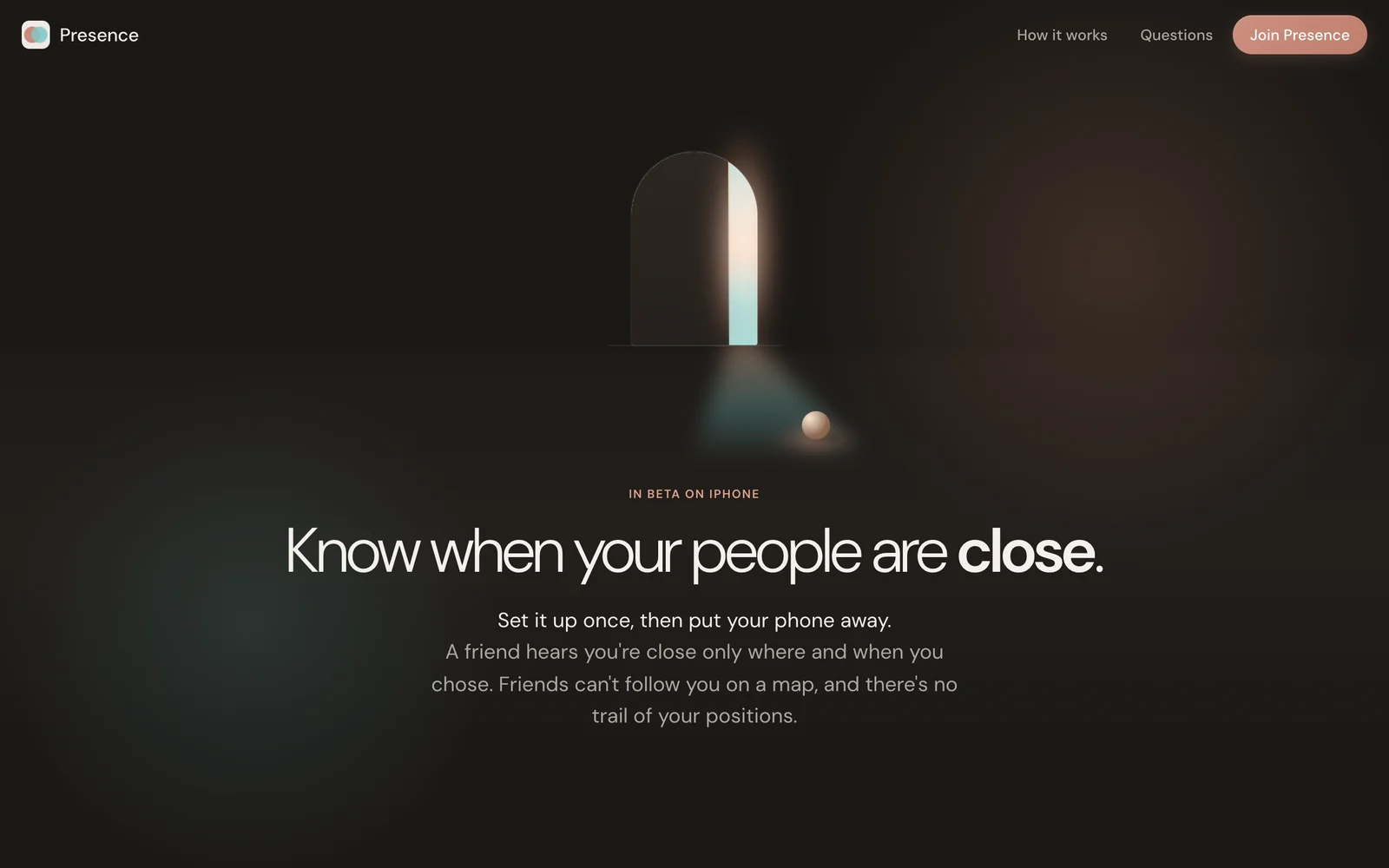
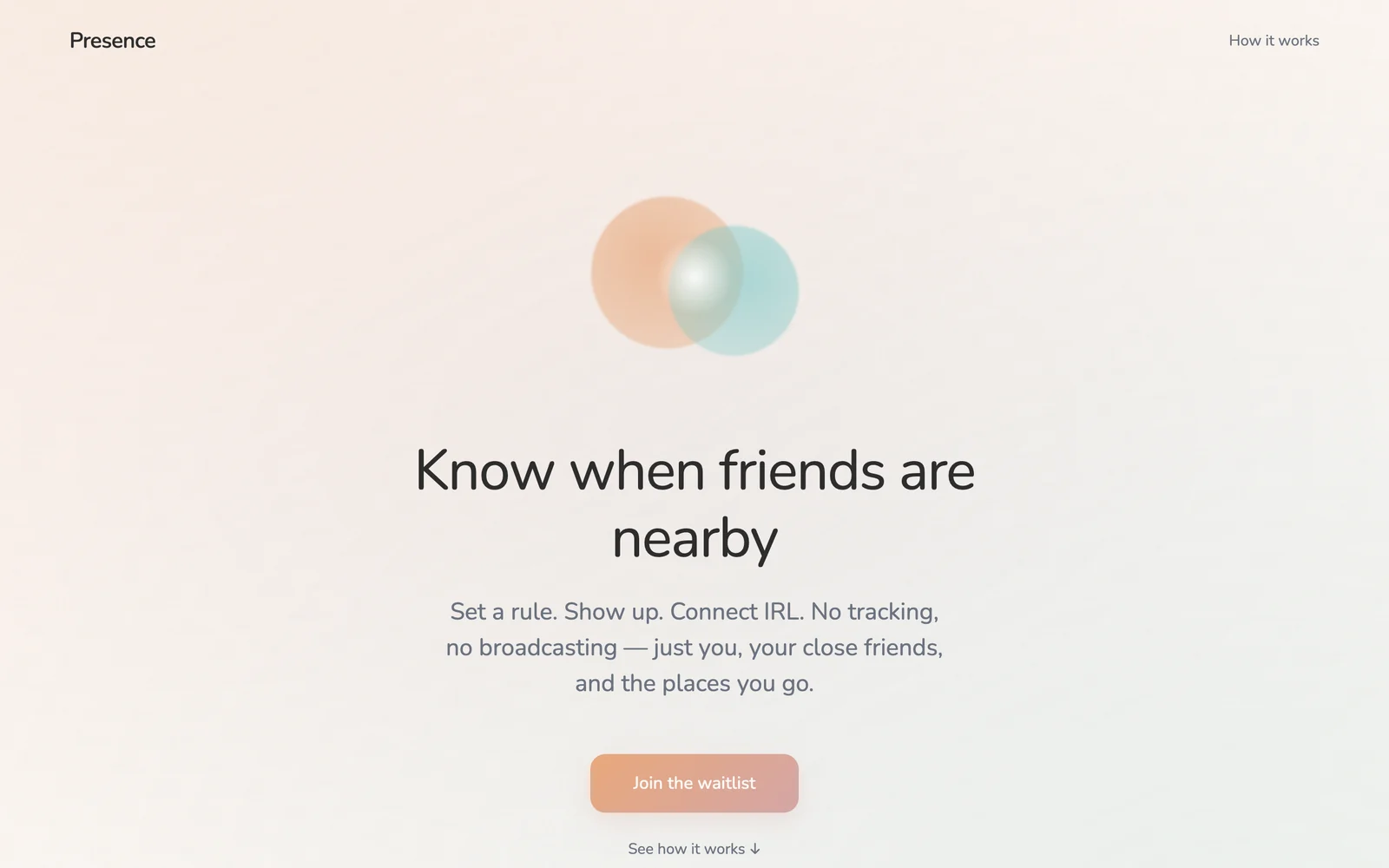
Fig. 02 · The pitch, seven months apart.The landing page from the first build in April, and joinpresence.app on November 12.
April 2026The April landing page. Two overlapping circles, coral and teal. Know when friends are nearby. Set a rule. Show up. Connect in real life. No tracking, no broadcasting. A button reads Join the waitlist.
November 2026joinpresence.app today. A door standing ajar with warm light behind it. Know when your people are close. Set it up once, then put your phone away.

The point is not to track people or be tracked. It’s to be met, literally, out in real life, when it’s opportune for both parties.

What the bet did to the map
03ApproachThe callsWhat did each promise cost?

On November 12, four of the seven pairs with a live rule had a rule going one way only.

Three promises in that sentence. Each one had to be built, and each one cost something.

Set me up once.

In April a rule took five screens. Now it is one sentence with the defaults filled in.

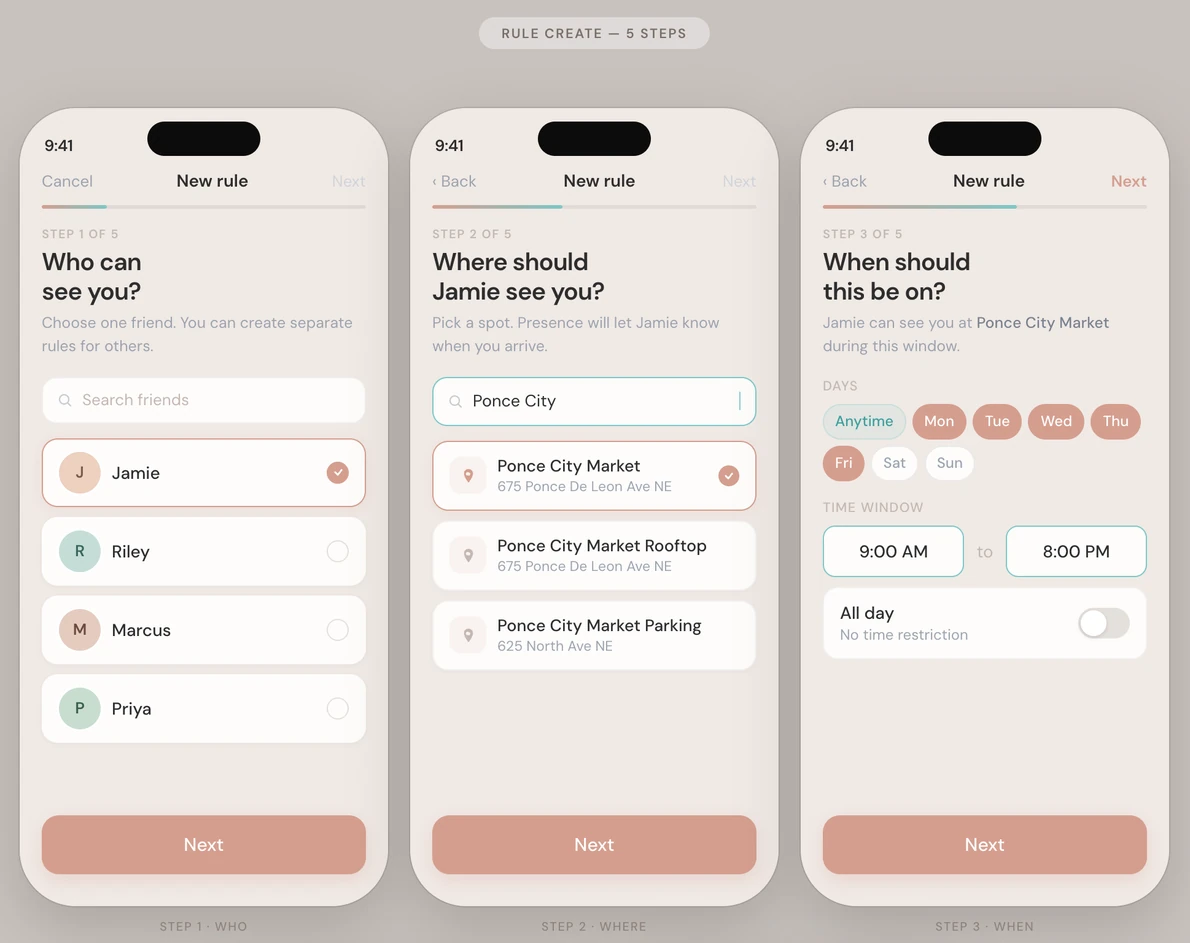
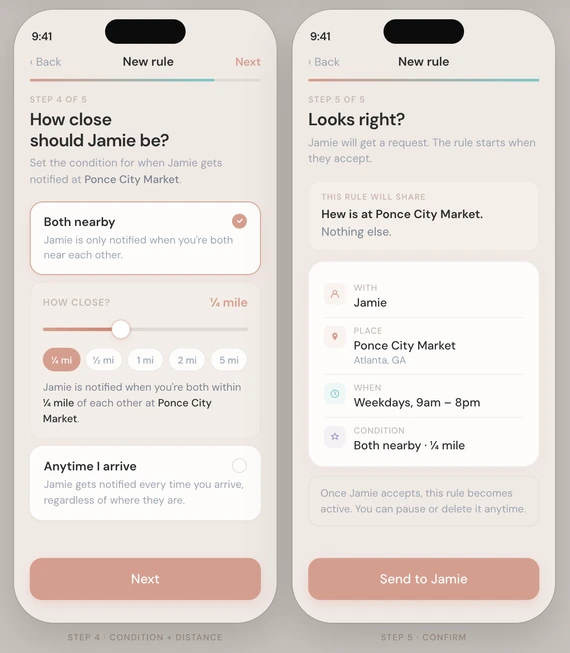
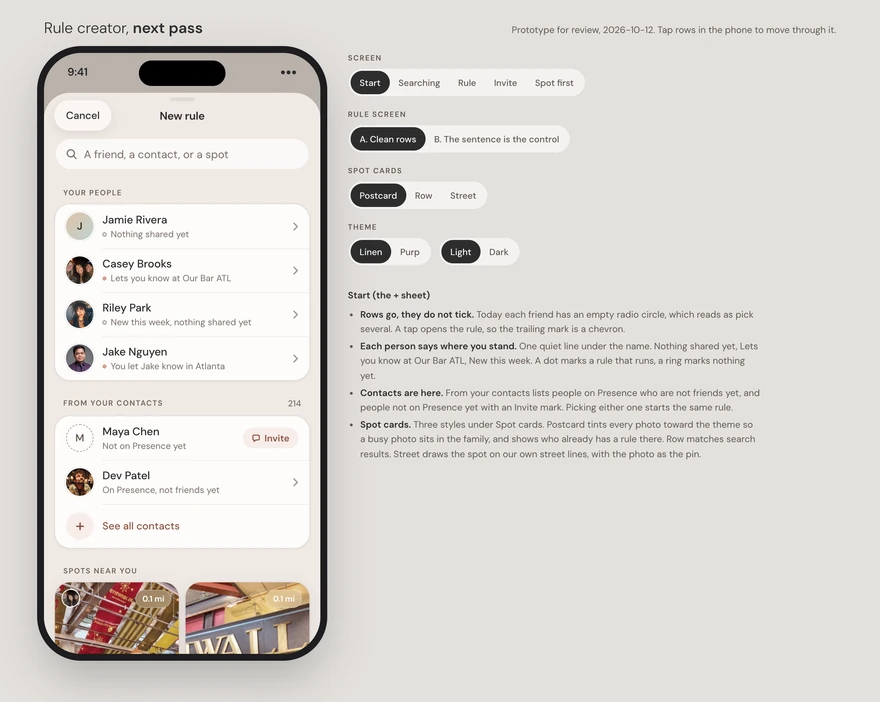
Fig. 03. The April flow, the two prototype rounds from October 12, and the composer in build 27.

How do you write a rule?

April | steps 1 to 3 of 5

Three phone screens from the April rule flow. Who can see you? Where should Jamie see you? When should this be on?
Five screens before you can read the rule.

April | steps 4 and 5

Two phone screens. How close should Jamie be, with Both nearby and Anytime I arrive. Then Looks right, a summary and Send to Jamie.

Oct 12 | round one

The first composer prototype. A phone with a search field and rows of people, beside switches for clean rows or the sentence as the control.
“A and B are not mutually exclusive.” I asked for both.

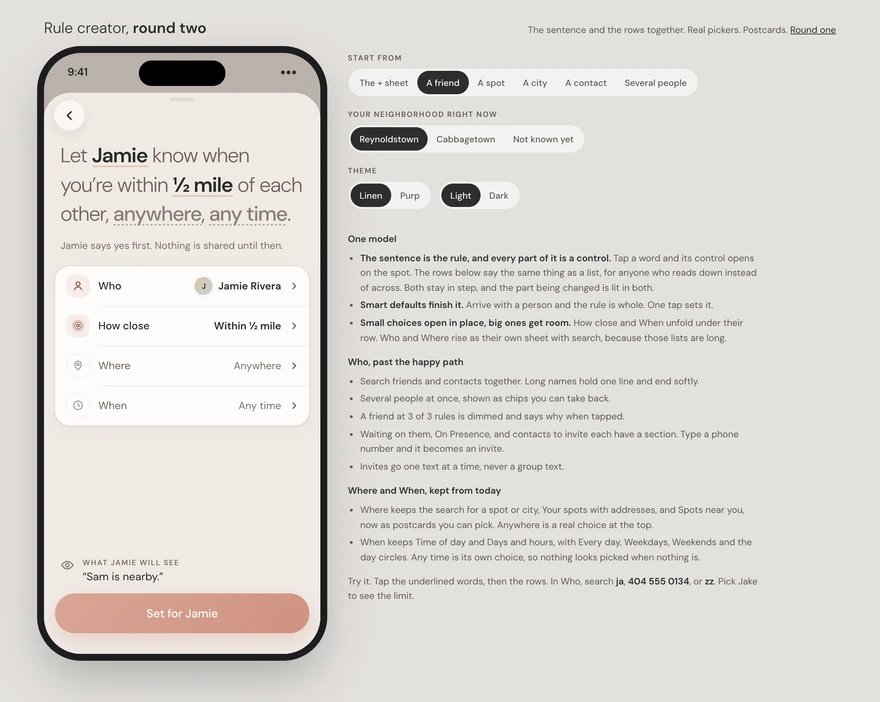
Oct 12 | round two

The second composer prototype. Let Jamie know when you are within half a mile of each other, anywhere, any time. Under it rows for who, how close, where and when.
The sentence is the rule, and every part of it is a control. Built the same day.

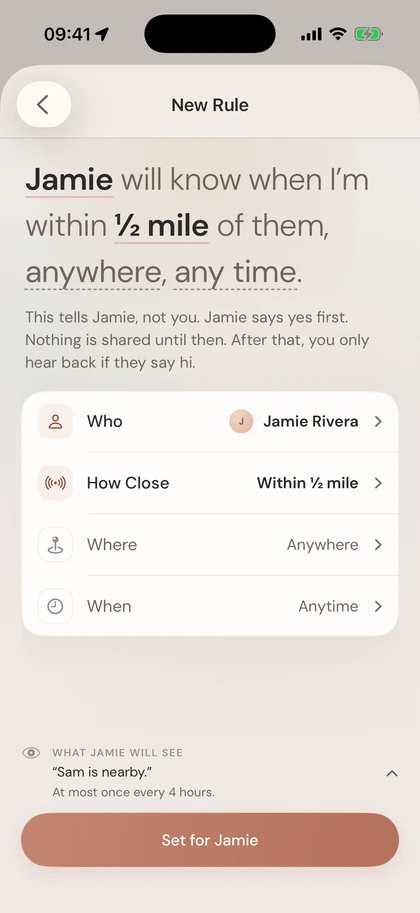
Build 27 | the composer

The composer in build 27. Jamie will know when I am within half a mile of them, anywhere, any time. This tells Jamie, not you. Rows for who, how close, where and when. A button reads Set for Jamie.
Already complete. The defaults fill it in, so the first tap can be Set.

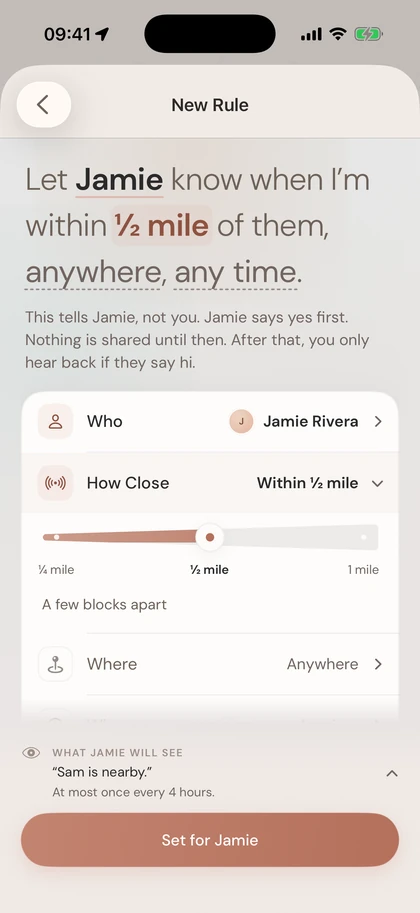
Build 27 | how close

The how close row opened. A slider from a quarter mile to one mile, set at half a mile, a few blocks apart.
Open a row only to change it. I call it opting into complexity.

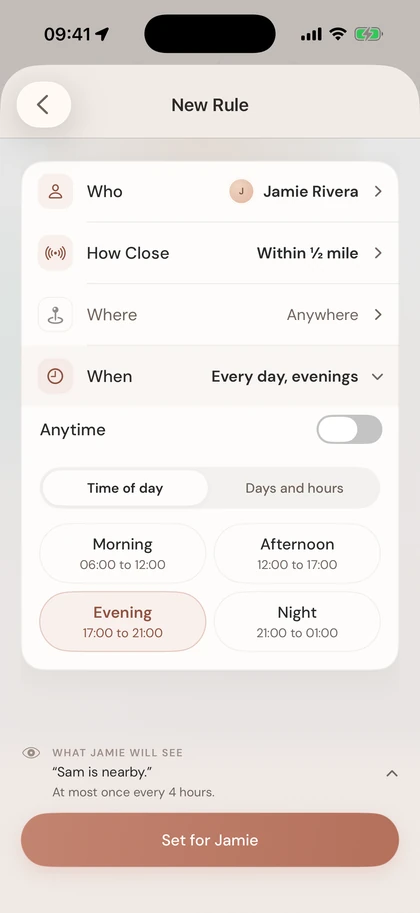
Build 27 | when

The when row opened. Time of day with morning, afternoon, evening and night, or days and hours.

Build 27 | the rule, after

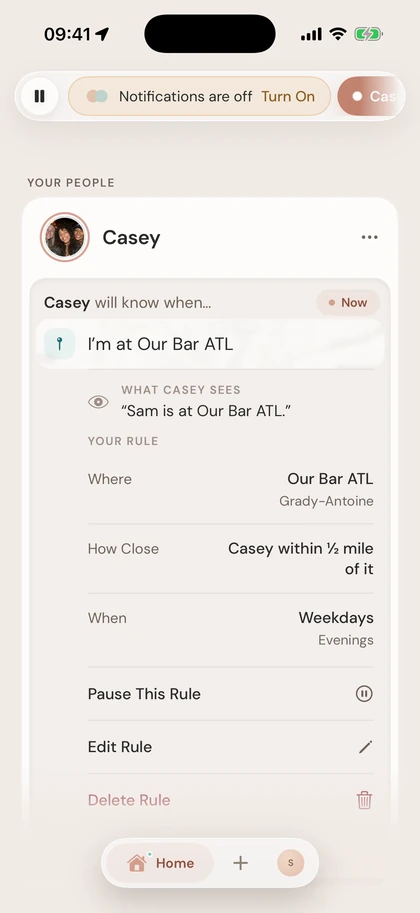
A friend card on Home, opened. Casey will know when I am at Our Bar ATL. What Casey sees. Rows for where, how close and when. Pause This Rule, Edit Rule, Delete Rule.
The same rows come back on the friend’s card.

The first rule builder had the wrong order and no smart defaults. A rule should be quick, easy and clear to set, with the detail there for whoever wants it.

Put me away.

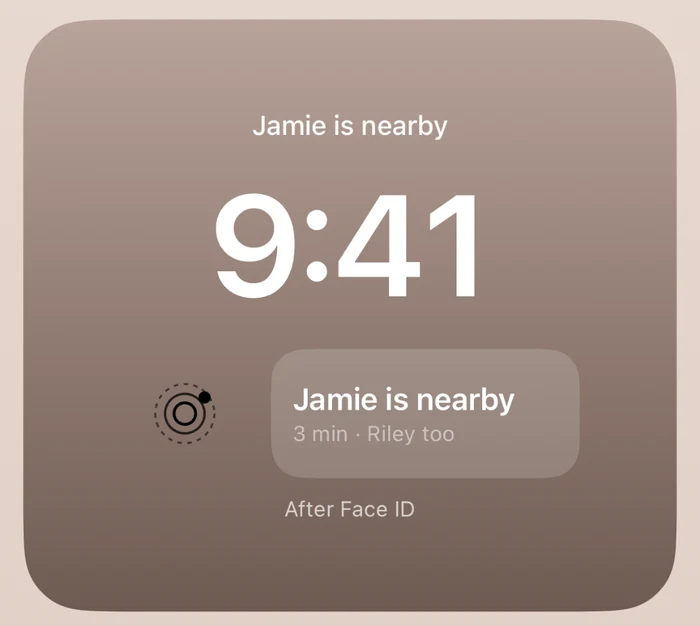
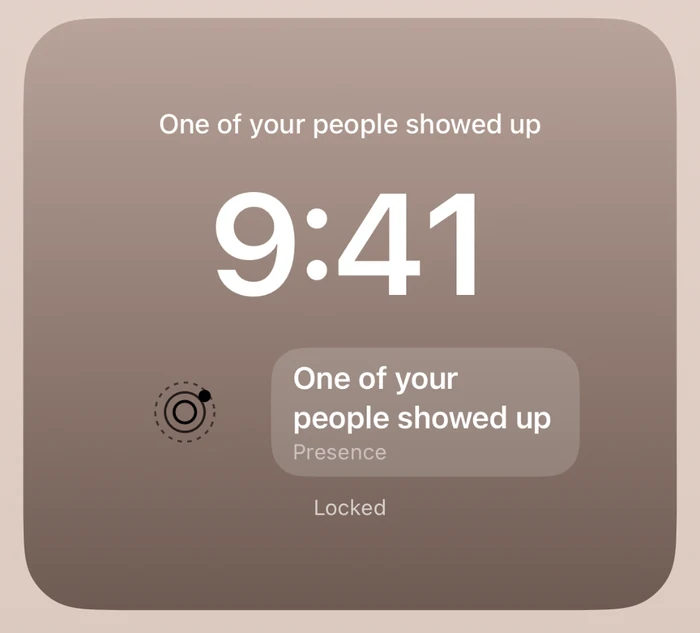
There is nothing to check. A rule speaks once, then rests for four hours, and the lock screen names no one.

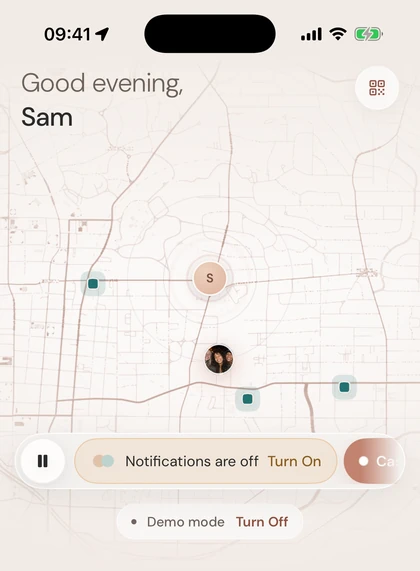
Fig. 04. The top of Home across four passes. The streets are public Atlanta around a fixed point. It is nobody’s home.

What may a map show?

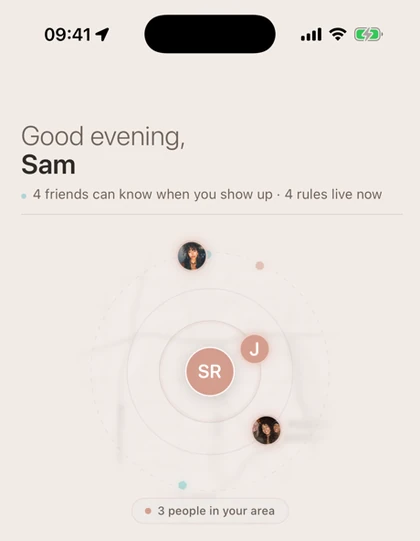
Oct 10 | no map

Home on October 10. Good evening, Sam. Friends on orbits around the person, and a chip reading 3 people in your area. No streets.

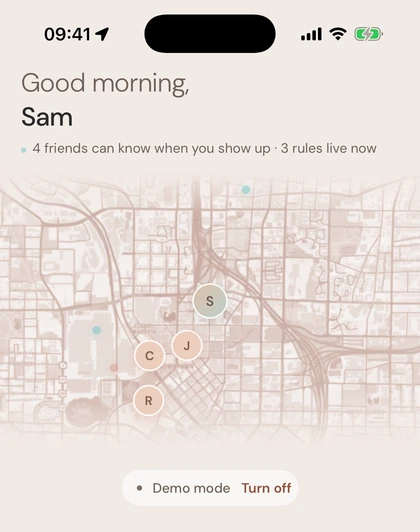
Oct 12 | a rectangle

Home on October 12. A street map in a rectangle behind the orbits, with dense street lines.
“Clearly a rectangle, not immersive edge to edge.”

Oct 12 | street lines only

Home later on October 12. Soft street lines that fade before the edges, with friends placed around the person.
No names, no buildings.

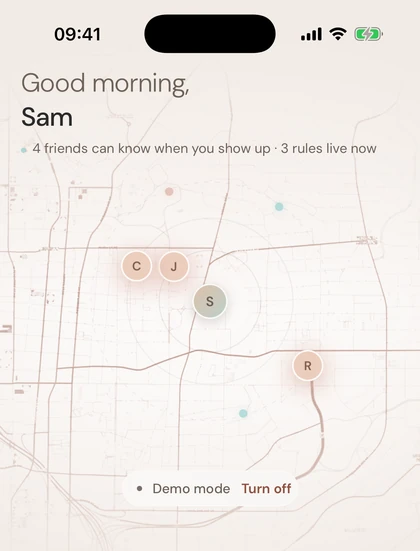
Nov 6 | build 27

Home in build 27. Soft street lines edge to edge, the person at the center, small teal squares for their own spots, and a status bar.
Your own spots are small squares, never a pin. A friend’s orbit shows how far the rule reaches, not where they are.

The map centers on your neighborhood, snapped to a grid about a mile wide, so it can never center within a block of you. It never shows a person’s position, a pin for a person, a path or coordinates.

Fig. 05 · The lock screen.Lock Screen widgets in build 27.
After Face IDA Lock Screen widget after Face ID. Jamie is nearby, 3 minutes ago, Riley too.
LockedThe same widget while locked. One of your people showed up. No name.

On your boundaries.

Two friends can be deeply connected and hold different boundaries. What works for me may not work for them, and I still want them to know what works for me. So every rule runs one way. You can make yourself findable. Nobody can switch on finding you. And any place can be a Quiet Place, starting with home.

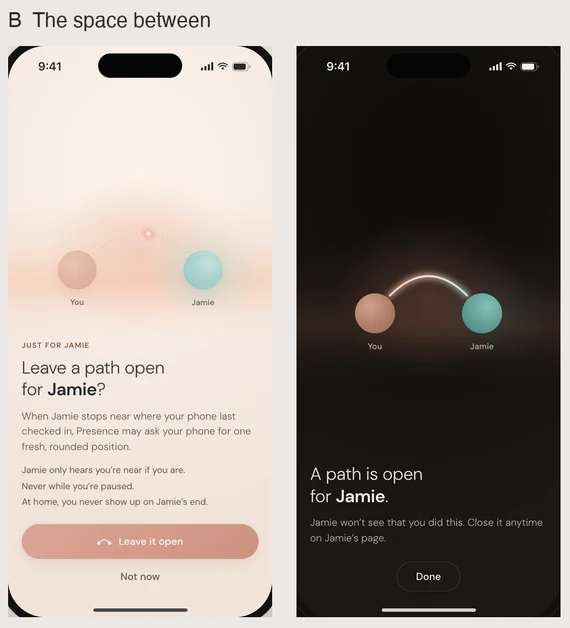
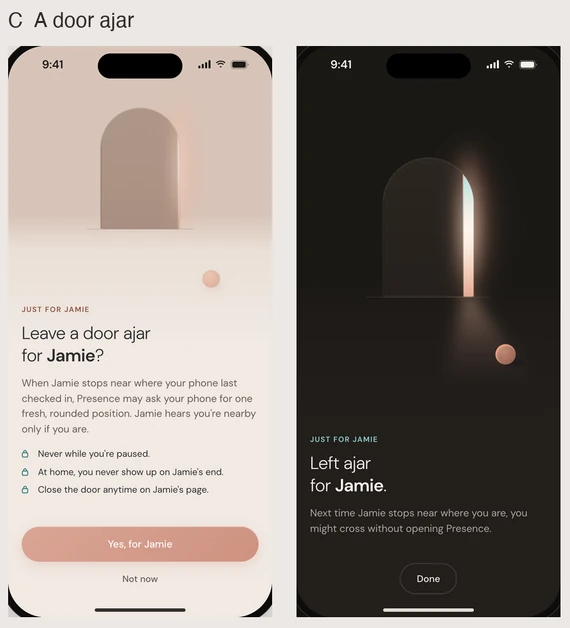
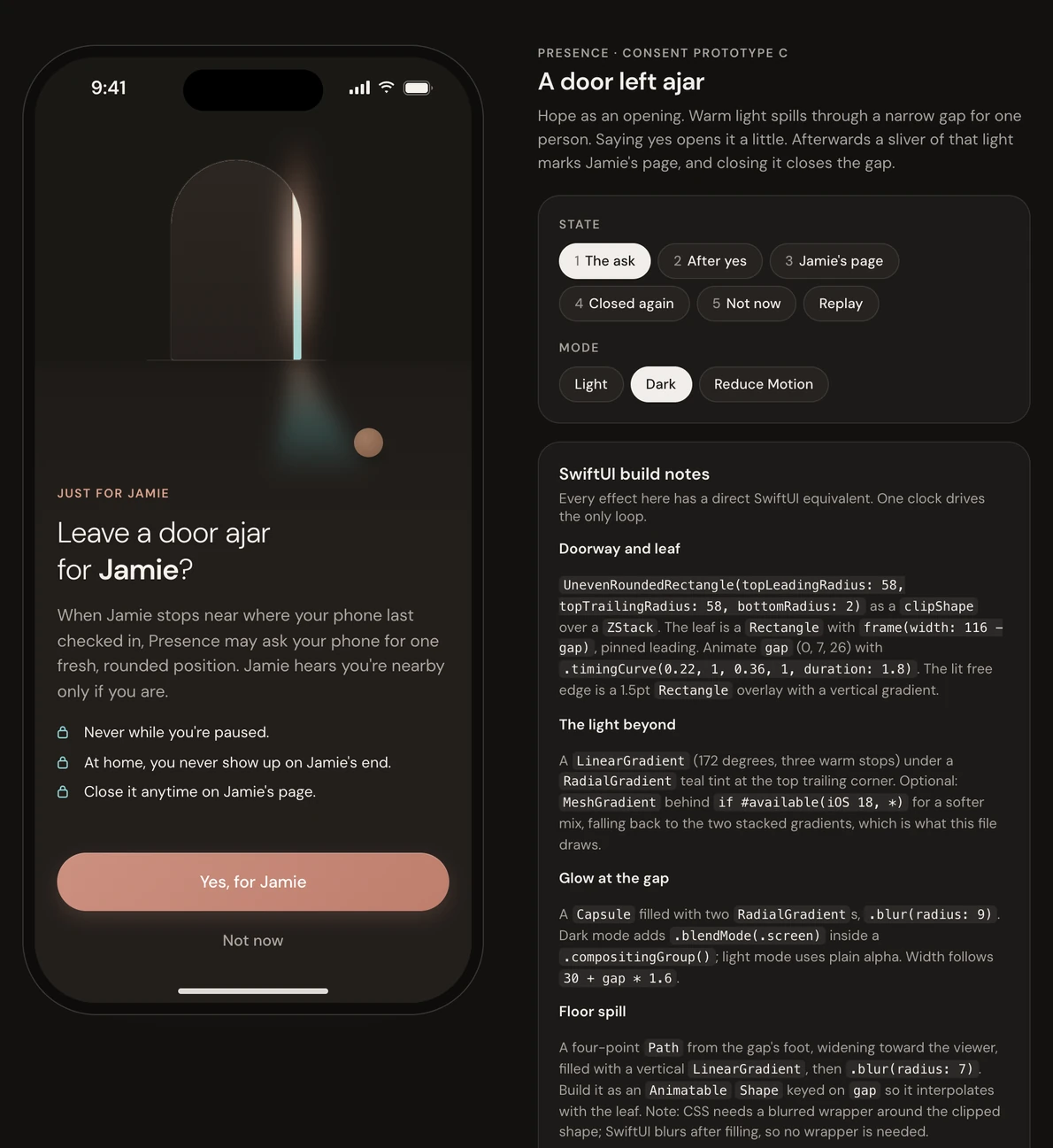
Fig. 07 · The door, moving.Recorded from the September prototype in a browser. A prototype, not the app.
Prototype C3 · dark
0:00
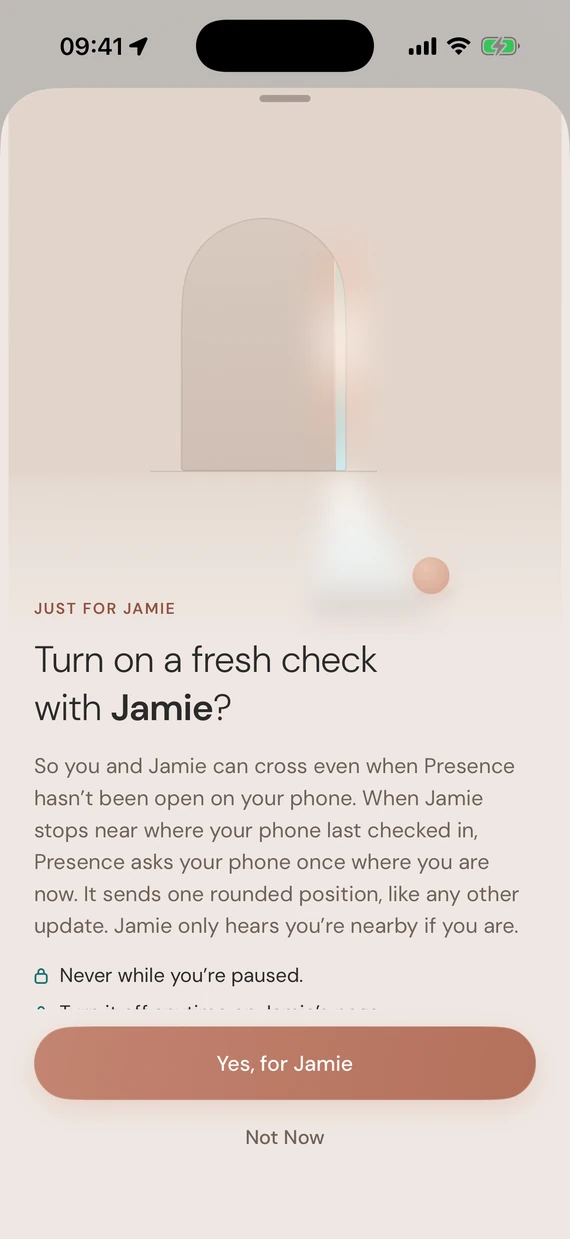
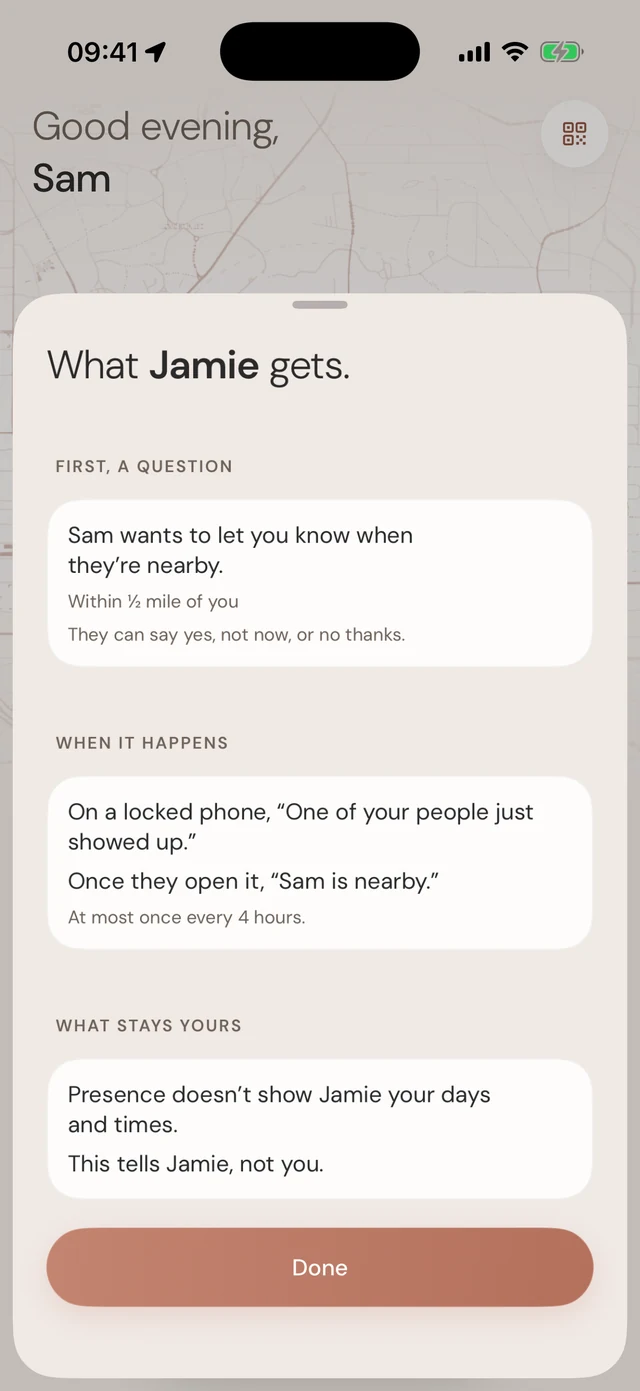
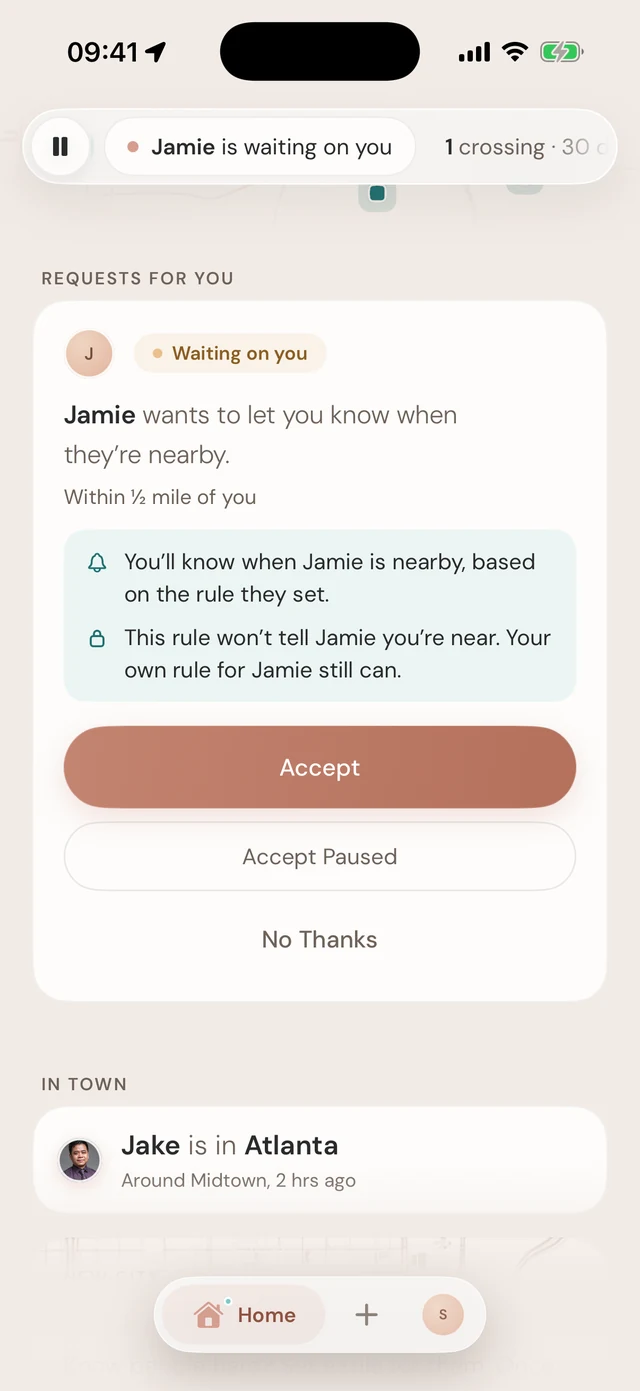
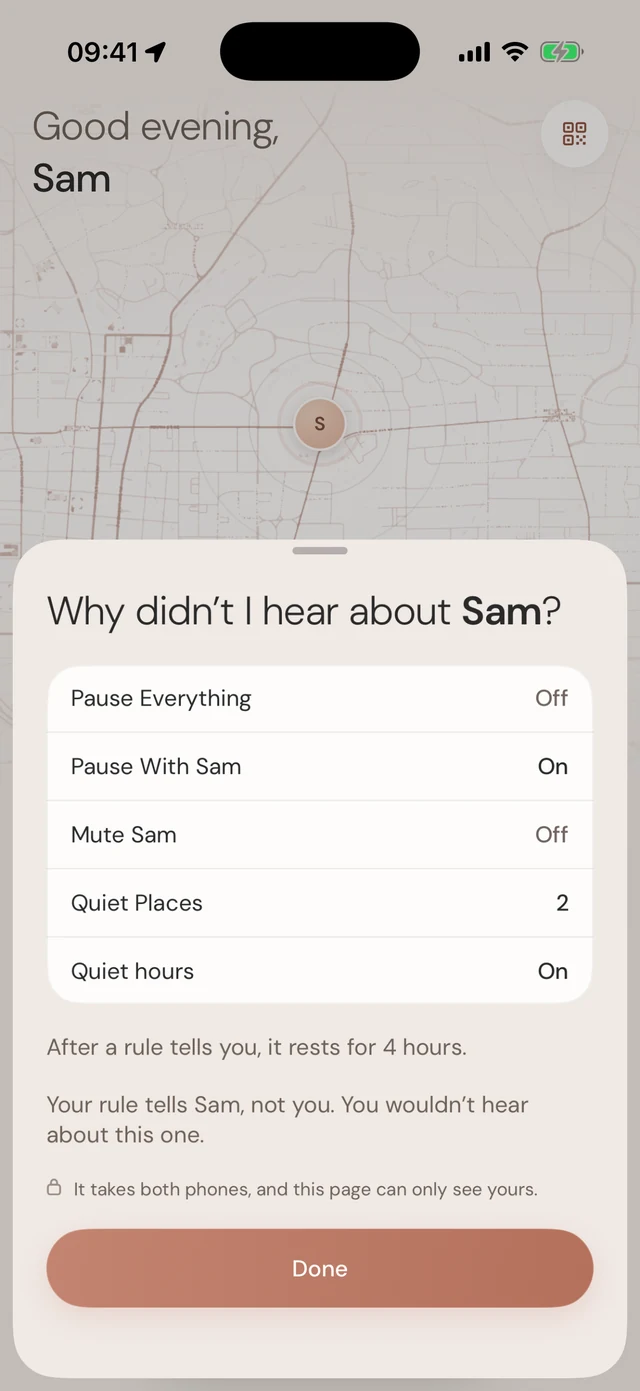
Fig. 08 · The promise, where people meet it.Build 27, demo mode.
Before you say yesA sheet titled What Jamie gets. First, a question. When it happens, on a locked phone, One of your people just showed up. What stays yours. This tells Jamie, not you.
The askHome with a request. Jamie wants to let you know when they are nearby. This rule will not tell Jamie you are near. Your own rule for Jamie still can. Buttons read Accept, Accept Paused and No Thanks.
When a rule stays quietA sheet titled Why did I not hear about Sam? Rows for Pause Everything, Pause With Sam, Mute Sam, Quiet Places and Quiet hours. Your rule tells Sam, not you. It takes both phones, and this page can only see yours.

Two calls no screen shows.

Safe before it grows

On the table Invite more people, or close the gaps first. What I did In July a review by four AI agents said no go. Blocking a person had never worked, and seven of eight rules for editing data never checked what was changed. I fixed both that week. In September I tested my own worst case, twenty friends in your building and one of them stalking you. It found four gaps, and I closed them before any public launch. Where it sits now On November 12 the live server had no edit rule without a check, and no live rule between people who aren’t friends.

What waits

On the table Android, a paid tier, public badges, and features for conferences. What I did Held all of them. Version one is about friend groups setting it up, trusting it and getting real delight from it. Badges felt too social inside the app, when the point is to be social outside of it. Where it sits now Android demand is counted, not built.

04ResultThe proofDid it work?

Five studies were planned on November 1, and none has run yet.

Everyone here is named by role, and nobody is quoted.

There was no formal research. Everything Presence knows about people, it learned from a handful of them using it.

An early member who brings in her friends

Her older iPhone froze three times, and build 28 fixed the cause. She noticed that my clearest explanation of Presence lived in a text I’d sent her and not in the app, so it became the invite. When iOS offered to limit location and she said yes, her rules went quiet without a word. That started a plan for 31 permission cases. By my count, most of build 28 came from her.

A beta tester

On November 8 he was told a friend was nearby while he sat at home, 6.2 miles away. A phone that had stopped moving was being treated as a phone that was lost. I fixed it that day and proved it on the live server. No place rule has fired since, so it is still unproven in the field.

Two early testers

Fellow club members tested builds 4 to 8. One asked if I could see him on the app while he was out. That was the map expectation I had to design against.

The way in

Of the nine people who joined after October 12, six never opened the app. They stopped at TestFlight, Apple’s app for beta testing. The join page now walks through it in three steps, and nobody has joined since to test them.

“That’s the hard part of the app. The app is made for you to put your phone away, but most apps are ventures. This app is just a utility, not begging for your attention.”
My reply to an early member November 11, when she asked if limiting location breaks the app
17
People with an account, November 12
10
Friend pairs
4/7
Live pairs that go one way
37/37
Checks passed on the false alarm fix

Where it stands.

Shipped

Open beta on iPhone, in English, Spanish, Korean and Simplified Chinese. Build 28 is with testers.

Next

General release early 2027. A native speaker’s review of three languages comes first.

The measure

On November 12 there is one ready pair, and I am in it. Six of nine people stopped at Apple’s beta step, so the number waits on general release.

05BuildHow it shipsHow does one person run it?

Only I call a build done. The agents were told to stop saying it for me.

Three of the 73 database changes since October 9 have no undo file. So I say 70 of 73, not every.

One person, a set of AI agents, and the release gates a team would have.

Decisions

Written down before code. One roadmap is the plan of record, each build has a release record, and one file records what is true on the live server.

Gates

Agents audit read only, and a second agent checks each finding before it reaches me. Every change runs the privacy checks and the full test suite. A database change is rehearsed in a transaction that rolls back, then goes live only on my go.

Where I said no

The agent’s consent pick. A refined door that looked right in stills and off on my iPad. Two passes of the map. And an argument to wait on a feature because the beta was small.

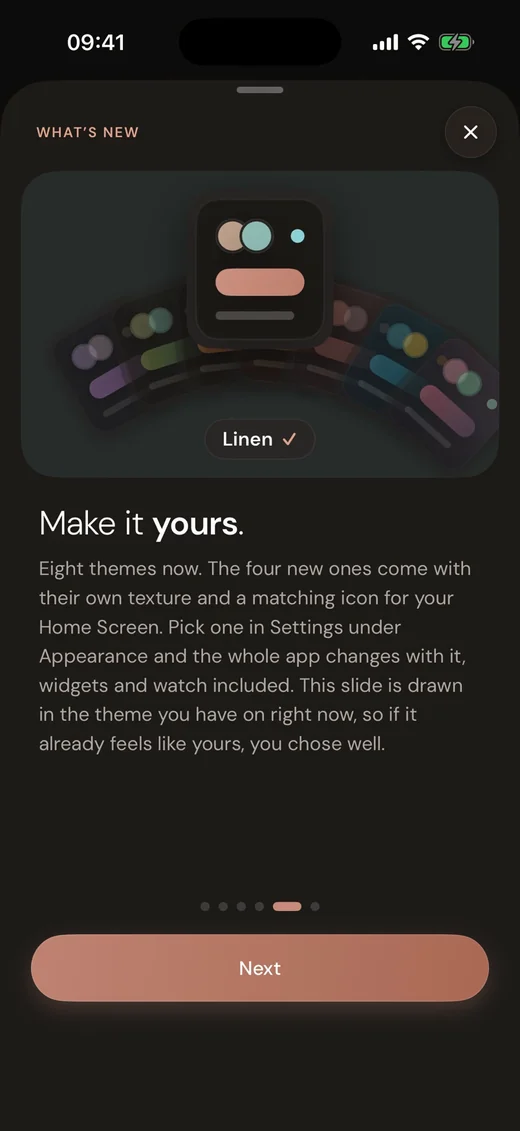
Fig. 09 · What’s New, build 27. Every release opens with three to six slides, each under 320 characters.Five of the six slides, recorded in the simulator. The names on slide two are my own test accounts.
What’s New · 36 seconds
0:00
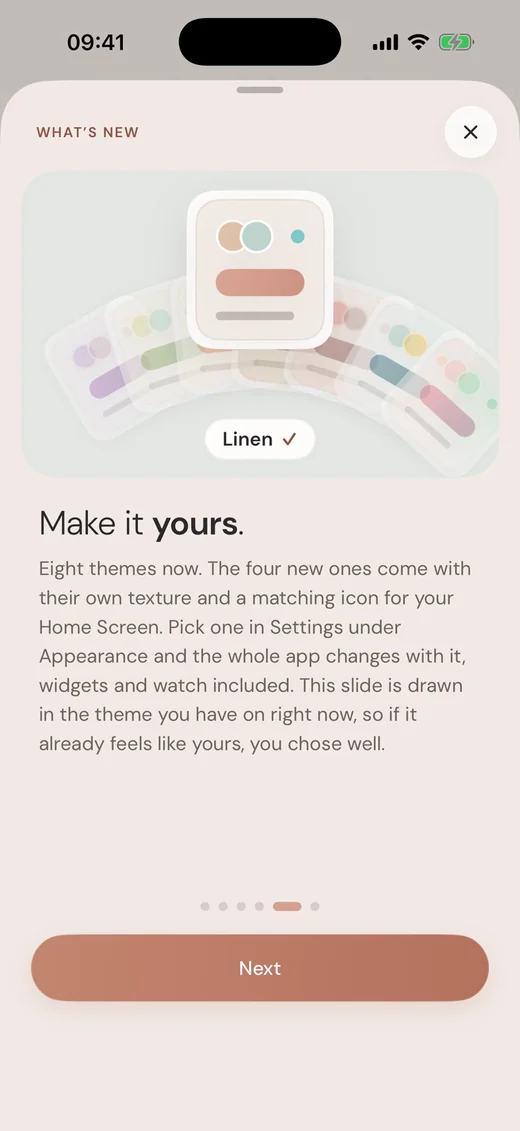
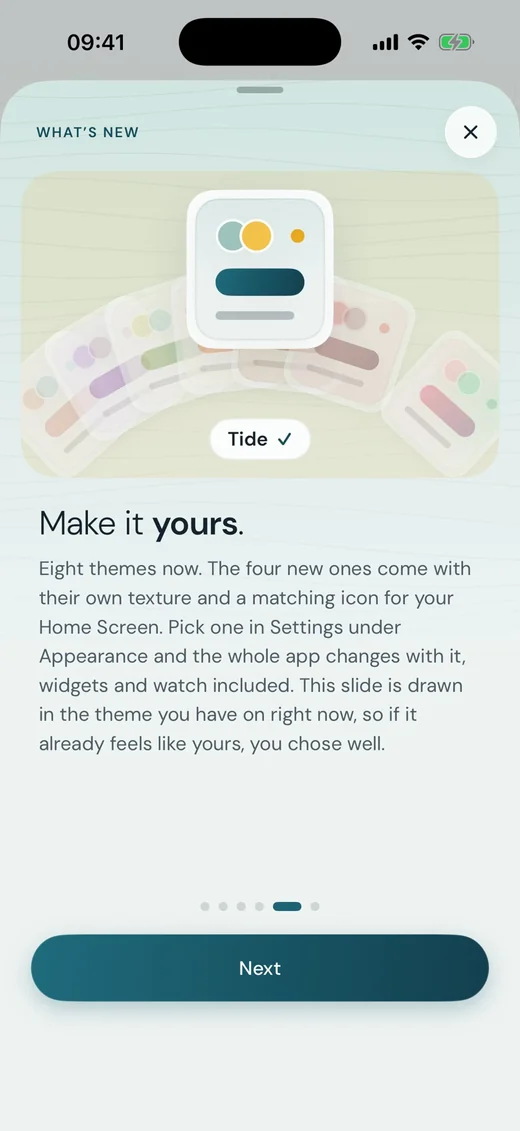
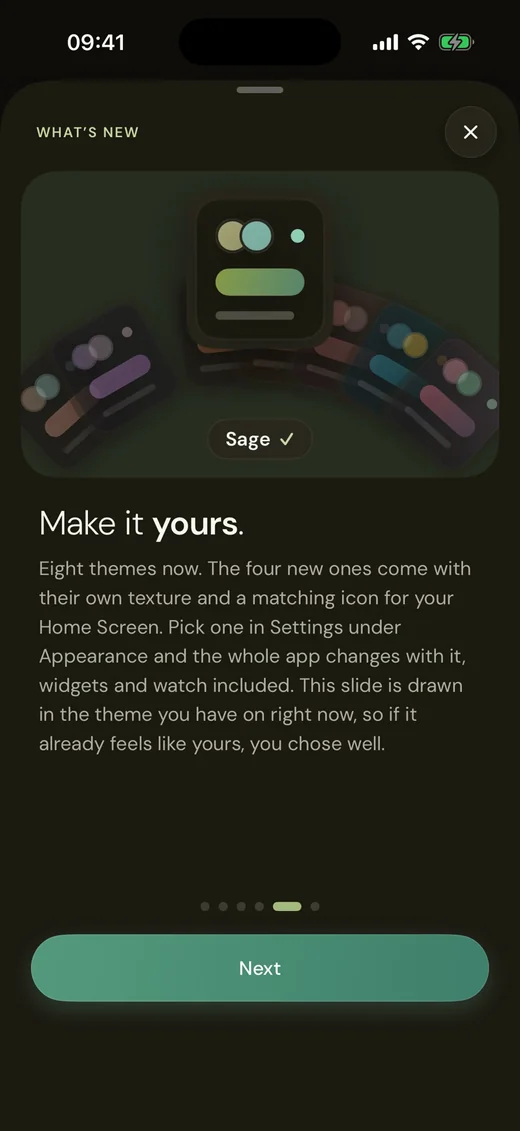
Fig. 10 · Each slide is drawn in the reader’s theme.Linen, Linen dark, Tide and Sage. The feeling I chose for the look is a door held in warm light.
LinenThe Make it yours slide in Linen. A fan of theme cards in coral and cream.
Linen, darkThe same slide in Linen dark.
TideThe same slide in Tide, pale blue and green with a teal button.
Sage, darkThe same slide in Sage dark, deep green with a jade button.
Fig. 11 · Judged moving. Home by person, and the tip that unrolls from a chip.Build 27, demo mode.
Home by person
0:00
The chip tip
0:00

A frame by frame recording showed iOS list rows snapping while a card unfolded, and no tuning fixed it. So Home became a plain scrolling stack, where the card and every row under it move on one curve.

725
Commits since April
167
Database changes live
18
Builds sent to testers

In April I told two friends I had set up “a pretty robust logic” for trust and safety. In July my own audit found that blocking a person had never worked. Every block had been failing quietly.

What I’d carry into the next product.

01

Write the promise down before the feature, then hold every screen to it. The promise will catch you, and that is its job.

02

Choose the number that tells you the truth while it is still small.

03

Judge motion in motion. Stills picked A, and watching it move picked C.

If your product competes for attention, I’d start by asking what it would take to need less of it.

Contact
Next case study Chronicles of Sage Orange A generative audio drama with lore governance. The other product from the studio. Read →
Contact